Family Legacy for Seniors: 10 Proven Ways to Preserve Memories

family legacy for seniors

Creating a family legacy for seniors is one of the most meaningful gifts your aging parent can give — and receive.

As people get older, they often reflect on what they’ve achieved in their lives. Some seniors feel satisfied. Others worry they didn’t accomplish enough.

But here’s what many don’t realize: a legacy isn’t just about career achievements or financial wealth. It’s about the wisdom, memories, stories, and values passed down to the people who matter most.

Research shows that legacy work isn’t just emotionally meaningful — it’s clinically beneficial.

A 2024 integrative review published in Psychogeriatrics analyzed 131 studies and found that life review activities significantly improve life satisfaction and reduce depression in older adults. Another meta-analysis found that seniors who engage in structured reminiscence experience marked improvements in quality of life and psychological well-being.

If you have an aging parent, encouraging them to document their memories, share their wisdom, and create lasting keepsakes can provide purpose during their later years — while preserving something invaluable for your family.

Here are the most meaningful ways to help your loved one build a family legacy for seniors that will be treasured for generations.


Why Creating a Family Legacy for Seniors Matters More Than You Think

Legacy work isn’t just about creating keepsakes. Research demonstrates genuine psychological and health benefits for seniors who engage in life review and legacy activities.

Reduces depression and improves mood

Studies consistently show that structured reminiscence reduces depressive symptoms in older adults. A 2024 review found that life review therapy is particularly effective for seniors experiencing mild to moderate depression.

Increases sense of purpose

Research published in Psychological Science found that people with a strong sense of purpose live up to seven years longer. Legacy work helps seniors feel that their lives have meaning and that their experiences matter.

Strengthens family bonds

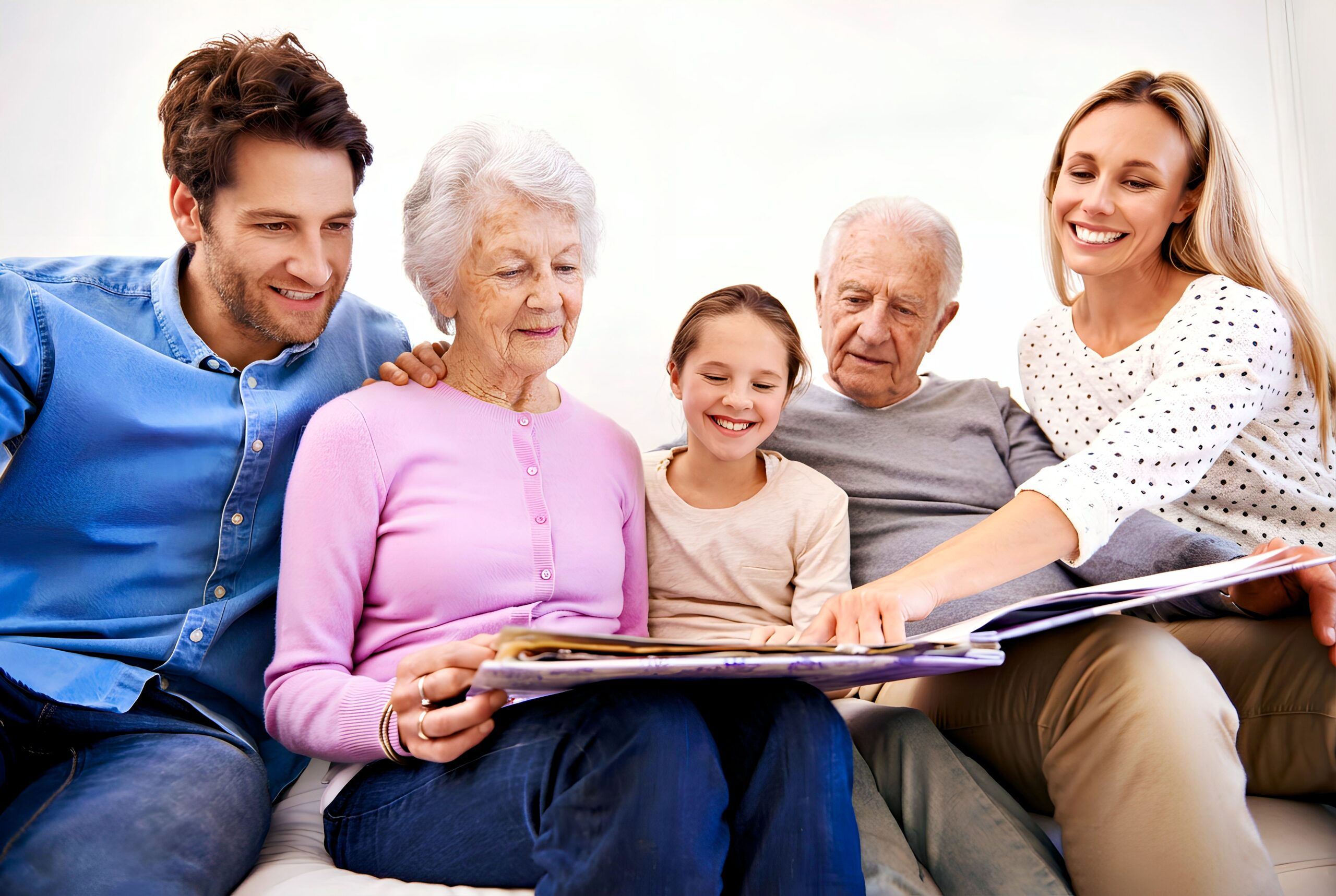
The process of sharing memories and creating legacy projects together brings families closer. Adult children gain a deeper understanding of their parents’ lives. Grandchildren develop connections that will last long after their grandparent is gone.

Preserves cognitive function

Recalling and organizing memories engages multiple brain regions. For seniors with early cognitive decline, reminiscence activities can help maintain function and provide meaningful engagement.

Provides comfort at the end of life

Research on Dignity Therapy — a brief intervention that helps terminally ill patients create a legacy document — shows it reduces psychological distress and increases sense of meaning during hospice care.

The message is clear: helping your loved one create a lasting legacy isn’t just sentimental. It’s genuinely good for their health and wellbeing.


10 Meaningful Ways to Create a Family Legacy for Seniors

1. Record Video or Audio Memories

Technology makes it easier than ever to capture your loved one’s voice, expressions, and personality for future generations.

Ask about milestone moments — Their wedding day, the birth of their children, their proudest achievements, the day they became grandparents.

Request advice for younger generations — What do they wish they’d known at 20? At 40? What’s the secret to a lasting marriage?

Capture everyday moments — Their laugh, the way they tell a joke, holiday traditions, and cooking their signature dish.

Use apps designed for this purpose — StoryCorps, Remento, and StoryWorth guide conversations with thoughtful questions.

Future generations will be able to see and hear their grandparents and great-grandparents — not just read about them.


2. Create a Comprehensive Family Tree

A family tree connects generations and helps descendants understand their origins.

If your family doesn’t have one — or it’s incomplete — your aging relatives hold the key to filling in the gaps.

Start with what they remember — Ask about their parents, grandparents, aunts, uncles, and cousins.

Include more than names and dates — Add occupations, places they lived, immigration stories, and military service.

Use genealogy tools — Ancestry.com, FamilySearch.org, and MyHeritage can help verify information.

Consider DNA testing — Services like 23andMe and AncestryDNA can reveal ethnic heritage and connect you with distant relatives.

This project often becomes a bonding experience. As your loved one helps complete the family tree, they’ll naturally begin sharing favorite memories — stories that might otherwise be lost.


3. Compile Family Recipes

Family recipes are more than instructions for preparing food.

They’re the meals that accompanied holidays, celebrations, and ordinary Tuesday dinners, becoming cherished memories.

Record recipes in your loved one’s handwriting — There’s something irreplaceable about seeing Grandma’s actual handwriting on a recipe card.

Include the stories behind the recipes — Where did it come from? Who taught them to make it?

Video them cooking their signature dishes — Written recipes never capture the “pinch of this” and “a little of that.”

Create a family cookbook — Compile recipes from multiple generations and distribute copies to family members.

Decades from now, your children will be able to make Great-Grandma’s cookies using her exact recipe — and tell their own children the story behind it.


4. Create Memory Books and Photo Albums

Photos capture moments. But without context, future generations won’t know the stories behind them.

Label every photo — Who is in the picture? When and where was it taken? What was happening?

Create themed albums — Wedding memories, military service, career highlights, travel adventures.

Make personalized albums for grandchildren — Each grandchild receives an album featuring photos with their grandparents.

Digitize old photos — Scan aging photographs before they deteriorate. Apps like PhotoScan make this easy.


5. Document Family Health History

This is a part of your loved one’s legacy that could someday save a life.

Ask about health conditions in the family — Heart disease, cancer, diabetes, mental health conditions, and autoimmune diseases.

Include extended family — Parents, grandparents, siblings, aunts, uncles, and cousins.

Note ages at diagnosis and death — Early-onset conditions may indicate genetic factors.

Use the Surgeon General’s family health history tool — My Family Health Portrait (phgkb.cdc.gov) organizes this information.

This practical legacy could alert future generations to screenings they need or lifestyle changes that could prevent disease.


6. Write or Dictate a Memoir

Some seniors enjoy putting their memories in writing, adding depth and detail that conversations might miss.

Start with prompts — “What was your childhood home like?” “What was the happiest day of your life?”

Consider guided journals — Books like “Grandma’s Story” provide questions to answer.

Offer to transcribe — If writing is difficult, record conversations and type them up.

Don’t aim for perfection — The goal is preservation, not publication.


7. Create a “Life Lessons” Document

Beyond stories, many seniors have wisdom they want to pass on — lessons learned through decades of living.

Ask what they wish they’d known — About marriage, parenting, money, careers, friendships.

Request advice for specific situations — “How did you handle job loss?” “What helped during hard times?”

Ask about regrets — What would they do differently? What risks do they wish they’d taken?

Capture their values — What principles guided their life? What matters most?

This wisdom document becomes a resource that family members can turn to during difficult times.


8. Preserve Heirlooms with Their Stories

Many families have items passed down through generations. But without the story, they’re just old objects.

Document the history of meaningful objects — Where did it come from? Who owned it? Why was it kept?

Photograph heirlooms alongside written descriptions — Create a catalog to share with family.

Let your loved one decide who receives what — Having these conversations now prevents conflict later.

Attach stories to objects — A note explaining history transforms jewelry into a connection across generations.


9. Record Their Voice Reading Favorite Books

Imagine a child hearing their great-grandparent read them a bedtime story — even decades after their great-grandparent has passed.

Record them reading children’s books — Goodnight Moon, The Giving Tree, or family favorites.

Capture meaningful poems, prayers, or scripture — Passages that guided their life.

Record songs they used to sing — Lullabies, hymns, or songs from their childhood.


10. Give Back to the Community Together

A legacy isn’t only what you leave to family. It’s also the mark you leave on the world.

Make a charitable donation in their name — Even a modest gift creates a lasting impact.

Volunteer together — Community service as a family creates memories while doing good.

Sponsor something meaningful — A park bench, a memorial brick, a scholarship fund.

Share their professional expertise — Retired professionals can mentor young people in their field.


Don’t Wait — Start Now

Here’s the difficult truth: the time to capture your loved one’s legacy is now. Not someday.

Cognitive decline can happen gradually — Early dementia may affect memory retrieval before families realize something is wrong.

Health can change suddenly — A stroke, a fall, or a hospitalization can dramatically change your loved one’s ability to participate.

Every day that passes is a story that might be lost — The details fade. The names are forgotten. The stories die with the storyteller.

You don’t need to complete everything at once. Start small — record one conversation, scan one photo album, write down one recipe.

But start today. Creating a family legacy for seniors is a gift that grows more valuable with time.


How Caregivers Can Help Create a Family Legacy for Seniors

If you’re caring for an aging parent, you may not have the time or energy to take on legacy projects on your own.

This is where professional in-home caregivers can help.

At All Heart Home Care, our caregivers do more than assist with daily tasks. They build genuine relationships with the seniors they care for — and can support legacy activities during their regular visits.

Companionship during memory activities — Looking through photo albums, organizing keepsakes, and prompting storytelling.

Assistance with technology — Helping seniors use recording apps or video chat with family.

Support for cooking family recipes — Working alongside your loved one to capture the process.

Reading and writing assistance — For seniors with vision or mobility challenges.

These meaningful activities provide cognitive stimulation, reduce isolation, and give seniors a sense of purpose — while creating something precious for your family.


References

  1. Jiang, V., Galin, A., & Lea, X. (2024). Life review for older adults: an integrative review. Psychogeriatrics, 24(6), 1402-1417. pubmed.ncbi.nlm.nih.gov
  2. Zhang, X., et al. (2023). Effectiveness on Quality of Life and Life Satisfaction for Older Adults: A Systematic Review and Meta-Analysis. Healthcare, 11(10), 1490. pmc.ncbi.nlm.nih.gov
  3. Allen, R.S., et al. (2008). Legacy Activities as Interventions Approaching the End of Life. Journal of Palliative Medicine, 11(7), 1029-1038. pmc.ncbi.nlm.nih.gov
  4. Neller, A.E., et al. (2023). Preparing for the Future While Living in the Present. The Gerontologist, 63(8), 1338-1348. pmc.ncbi.nlm.nih.gov
  5. Hill, P.L., & Turiano, N.A. (2014). Purpose in life as a predictor of mortality across adulthood. Psychological Science, 25(7), 1482-1486. pubmed.ncbi.nlm.nih.gov

We’re Here to Help

At All Heart Home Care, we understand that family legacy for seniors is about more than memories.

It’s about connection. Meaning. And love that transcends generations.

Our caregivers provide the companionship and support that help seniors engage in meaningful activities, preserve their stories, and maintain quality of life.

Whether your loved one needs a few hours of respite care so you can work on legacy projects together, or comprehensive daily assistance that includes meaningful engagement activities, we’re here for your family.

Call us at (619) 736-4677 to learn how we can help your loved one live their best life — and leave a legacy that will be treasured forever.

Disclaimer: This article is for informational purposes only. Legacy planning activities should be adapted to your loved one’s cognitive and physical abilities. If you have concerns about memory or cognitive decline, consult with a healthcare provider.
Share:

More Posts

About the author

Eric Barth, co-founder and CEO of All Heart Home Care San Diego

Eric Barth

CEO, All Heart Home Care

Eric Barth is the founder and CEO of All Heart Home Care™, an award-winning San Diego agency dedicated to providing compassionate, personalized in-home care for seniors. As the writer behind the All Heart Home Care blog, Eric shares insights and stories drawn from years of hands-on experience leading one of San Diego’s most trusted home care teams.

Additional FAQ's on Digital Home Care System

Yes. HITRUST CSF Certified security—same gold standard hospitals use. More secure than paper.

Extremely rare (99.9% uptime), but caregivers can work in offline mode if connectivity is temporarily lost. Care continues without interruption. Documentation syncs automatically when connection returns.

Caregivers document throughout their shift in real-time. Notes are typically finalized and visible in Family Room within minutes of the caregiver clocking out.

We can set up Family Room accounts for as many family members as you want—local siblings, children in other states, anyone you authorize. Everyone sees the same information. No limit on number of accounts.

Yes. Family Room includes secure document storage. Upload medical records, insurance cards, POLST forms, medication lists, doctor’s instructions, photos—anything important. All authorized family members can access these documents. No more searching for forms.

We update the digital care plan immediately, and all caregivers receive instant notification of changes. This is one of the biggest advantages over paper—updates reach everyone simultaneously, not gradually over days or weeks.

Absolutely. Family Room is a tool for families who want it, not a replacement for human connection. We’re always reachable by phone at (619) 736-4677. Many families use both—portal for quick updates, phone calls for detailed conversations.

We train every caregiver on the WellSky mobile app before their first shift. The app is intuitive—designed specifically for caregivers, not engineers. If someone can text and use GPS navigation, they can use our caregiver app. And we provide ongoing support.

Yes. The Family Room care calendar shows upcoming shifts with caregiver names and times. You’ll know exactly who’s coming and when. No more surprise caregiver switches.

Use the two-way messaging feature in Family Room. Send your message, and the caregiver receives an instant notification on their mobile app. They’ll see it and can respond or confirm receipt immediately.

Yes. All notes are searchable. Want to see every mention of “appetite” from the past month? Type it in the search bar and find all relevant notes instantly. No more flipping through pages of handwritten entries.

You can access the complete care history from the day Family Room access began. Review notes from last week, last month, or since care started. Historical data helps identify patterns over time.

Family members cannot delete caregiver documentation—that’s protected and maintained by All Heart for record-keeping purposes. You can delete your own uploaded documents, but we can often recover those if needed within a certain timeframe.

With your authorization, we can provide limited Family Room access to healthcare providers. This allows better coordination between home care and medical teams. You control exactly who has access and what they can see.

Family Room works both ways. You can access it through any web browser (Chrome, Safari, Firefox, Edge) on your computer, or download the mobile app for easier access on your phone or tablet. Your choice.

All authorized Family Room users see the same care information—we can’t create different access levels for different family members. However, you (as the primary contact) control who gets Family Room access in the first place. If family dynamics are challenging, you decide who receives login credentials.

The messaging system shows when messages are delivered and read. You’ll see confirmation that the caregiver received and opened your message. For critical information, you can also call our office to ensure the message was received.

Yes. You can print individual shift notes, date ranges, or specific types of documentation (like Change of Condition reports) directly from Family Room. Useful for doctor appointments or insurance purposes.

If your loved one transitions to hospice, hospital, or another care setting, we can maintain your Family Room access for a transition period so you have complete records. After care ends, we provide a final data export if requested, then access is closed according to your wishes and legal requirements.

Yes. Family Room is accessible from anywhere with internet connection. If you’re traveling abroad, you can still check on your loved one’s care. The system works globally.

Family Room doesn’t support selective information sharing—all authorized users see the same care documentation. For private family communications, you’d need to use personal email, phone, or text outside the Family Room system.

Change of Condition reports automatically alert you when caregivers document significant health changes. For custom alerts (like specific behaviors or situations), talk to our office—we may be able to add special flags to your loved one’s care plan that trigger notifications.

We typically set up Family Room access during your initial care planning meeting, before the first caregiver shift. You’ll have login credentials and a brief tutorial on how to use the portal. Most families are viewing their first shift notes within 24 hours of care beginning.

Complete Security & Privacy Information

HITRUST CSF Certification - What This Means

HITRUST CSF (Common Security Framework) is the most rigorous security certification in healthcare. It's harder to achieve than HIPAA compliance alone. This certification requires:

Why it matters: If it’s secure enough for hospital patient records, it’s secure enough for your loved one’s care information.

Bank-Level Encryption Explained

Data in Storage (At Rest):

Data in Transmission (In Transit):

What this means: Even if someone intercepted the data (extremely unlikely), they would only see scrambled, unreadable information.

Strict Access Controls

Who Can See What

Family Member Access:

Caregiver Access:

Staff Access:

Audit Trail:

HIPAA Compliance - Federal Protection

The Health Insurance Portability and Accountability Act (HIPAA) establishes federal standards for protecting health information. Our compliance includes:

Privacy Rule Compliance:

Security Rule Compliance:

Breach Notification:

Business Associate Agreements:

Continuous Backup & Disaster Recovery

Automated Backups:

Redundancy:

Disaster Recovery Plan:

What this guarantees: Your loved one’s care information is never truly lost. Even if an entire data center were destroyed, complete backups exist elsewhere.

99.9% Uptime Guarantee

What “99.9% uptime” means:

Monitoring:

If the system goes down:

Multi-Factor Authentication (Optional)

For families who want extra security, we can enable multi-factor authentication (MFA):

Mobile Device Security

Caregiver Phones:

Your Devices:

Security Incident Response

In the extremely unlikely event of a security concern:

Digital vs. Paper Security Comparison

Security Concern
Paper Binders
WellSky_Color

Who can read it?

Anyone who enters the home

Only authorized users

Can it be lost?

✔︎ — permanently

— backed up continuously

Can it be damaged?

✔︎ — spills, fires, floods

— stored digitally

Is access tracked?

✔︎ Access logged & audited

Encryption protection?

✔︎ — bank-level encryption

Updates reach everyone?

— printing/distribution delays

✔︎ — instant notification

Survives disasters?

✔︎ — redundant backups

HIPAA compliant?

— difficult to prove

✔︎ — certified & audited

Can be accidentally discarded?

✔︎

— requires a password

Verdict: Digital is significantly more secure than paper in every measurable way.

Common Security Questions

"What if I forget my password?"

Secure password reset process via email or phone verification. We verify your identity before resetting access.

"Can hackers access the system?"

Multiple layers of security make unauthorized access extremely difficult. Regular penetration testing simulates attacks to identify and fix vulnerabilities before hackers can exploit them.

"What if my phone is stolen?"

Change your password immediately from any other device. The thief would still need your password to access Family Room.

"Can All Heart staff see my credit card information?"

No. Payment processing is handled by a separate, PCI-compliant payment processor. We never see or store your full credit card number.

"What happens to the data if I stop using All Heart?"

Your data is retained according to legal requirements (typically 7 years for healthcare records), then securely deleted. You can request a copy of your data at any time.

This isn’t just secure—it’s among the most secure systems available in healthcare.

Your information is safer in our digital system than it ever was in a paper binder sitting on a kitchen counter.

Complete Care Plan Contents:

Care Goals & Priorities

Emergency Contact Information

Medical Conditions & Health History

Mental Health & Cognitive Status

Medications & Supplements

Mobility & Transfers

Personal Care Routines

Meal Preparation & Dietary Needs

Daily Routines & Schedules

Activities & Engagement

Home Environment Details

Transportation & Driving

Additional Important Information

This comprehensive information ensures every caregiver provides consistent, personalized care from day one.

Tracking health changes that matter.

The Change of Condition form documents significant shifts in your loved one’s health—new symptoms, changes in mobility, behavioral differences, or improvements in their condition. This isn’t about minor day-to-day variations; it’s about meaningful changes that physicians, families, and caregivers need to know about.

Why have a separate form for this?

Instead of searching through weeks of caregiver narratives to find when symptoms started or conditions changed, this form puts all significant health changes in one easy-to-reference place. When doctors ask “when did the difficulty walking begin?” or family members want to understand the progression of a condition, you’ll have clear, dated documentation right at your fingertips.

What gets documented:

Each entry includes:

Why this form matters:

Early detection changes outcomes. When caregivers notice something different—increased confusion, difficulty walking, loss of appetite, or even positive improvements like better mobility—documenting it immediately allows for faster responses.

Your family stays informed about meaningful health changes. Physicians receive accurate updates during appointments instead of relying on memory. Incoming caregivers know exactly what’s changed and what new precautions or assistance your loved one needs.

One form. Complete health timeline. Better care.

Whether tracking a temporary change after a fall or documenting the progression of a chronic condition, the Change of Condition form creates a clear health timeline. This helps everyone—doctors, family members, and our San Diego caregiver team—understand how your loved one’s needs are evolving and respond appropriately.

Proactive monitoring isn’t just good practice. It’s essential senior care.

How the Caregiver Narrative works.

Each caregiver documents their shift using a simple timeline format that captures the essential details of your loved one’s day. This structured approach ensures consistency across all caregivers and makes information easy to find.

What we document in every narrative:

Narrative Format:

Each entry follows this structure:

Why this format works:

This timeline approach provides clear, chronological documentation that’s easy for incoming caregivers to read and understand. Instead of wondering what happened during the previous shift, they can see exactly what your loved one ate, how they felt, what activities they enjoyed, and any health changes observed.

One record. Every shift. Complete continuity.

Whether care is short-term, long-term, or evolving, the Caregiver Narrative ensures nothing gets missed and nothing gets repeated. Your family can review the journal at any time during visits, or we can share photos of recent narratives with long-distance family members who want to stay connected and informed.

Complete transparency and peace of mind, right when you need it.

Your loved one's complete care roadmap, now available digitally.

The All Heart Customized Care Plan is completed during your initial assessment and tailored to your loved one’s specific needs, preferences, mobility level, and safety requirements.

Now fully digital and accessible on every caregiver’s phone.

We’ve gone paperless. Your care plan is accessible through our digital platform—caregivers reference it anytime, anywhere. Updates happen in real-time, so when something changes, every caregiver sees it immediately.

What's included:

Care goals, emergency contacts, medical conditions, mental health & cognitive status, medications & supplements, mobility & transfers, personal care routines, meal prep & dietary needs, daily routines, activities & engagement, and home environment details.

One plan. Every caregiver. Consistent care.

This digital approach ensures every San Diego caregiver has the same accurate, up-to-date information from day one—promoting safety, continuity, and person-centered care.

See how we organize care information. This form becomes your loved one’s digital care roadmap.