Post-Surgery Home Care: What Every Family Needs to Know

post-surgery home care All Heart Home Care

The surgery went well. The doctors are pleased. Now comes the part no one fully prepares you for: recovery at home.

For families navigating post-surgery home care, the weeks following discharge can feel overwhelming. Between managing medications, attending follow-up appointments, monitoring for complications, and simply helping your loved one with daily activities, the responsibilities pile up quickly. And the stakes are high — research shows that what happens at home after surgery directly impacts whether your loved one heals smoothly or ends up back in the hospital.

At All Heart Home Care, we’ve supported hundreds of San Diego families through surgical recovery. This guide shares what we’ve learned — and what the research shows — about successful post-surgery home care.


Why Post-Surgery Home Care Matters More Than You Think

The first 30 days after surgery are critical. This is when complications are most likely to develop, medication errors are most likely to occur, and falls can undo weeks of healing.

A 2024 Yale study published in JAMA Network Open found that among older adults who had major surgery, nearly 1 in 8 (11.6%) were readmitted to the hospital within 30 days. Within six months, that number climbed to more than 1 in 4 (27.6%).

The numbers are even higher for those with frailty or cognitive conditions like dementia.

What Drives Hospital Readmissions After Surgery?

Research identifies several factors that increase the risk of being readmitted after surgery:

  • Postoperative complications — The single biggest predictor of readmission, with patients experiencing any complication being 4.2 times more likely to be readmitted
  • Surgical site infections — Often result from improper wound care at home
  • Medication errors — Missing doses, taking incorrect amounts, or dangerous drug interactions
  • Falls — Particularly common when patients are weakened, on pain medication, or trying to do too much too soon
  • Malnutrition and dehydration — The body needs proper fuel to heal
  • Lack of support at home — Patients without adequate help are more likely to miss warning signs or skip critical care tasks

The good news? Many of these factors are preventable with proper post-surgery home care and support.


Recovery Timelines: What to Expect After Common Surgeries

Understanding realistic recovery timelines helps families plan appropriate post-surgery home care. Every patient heals differently, but here’s what research and clinical experience suggest:

Hip Replacement Recovery

Hip replacement has become one of the most successful surgeries in modern medicine. Many patients now go home the same day or after just one night in the hospital.

Typical Timeline:

  • Day 1: Most patients can stand and walk with assistance
  • Weeks 1-2: Use a walker or cane; need significant help with daily activities
  • Weeks 3-6: Gradually transition from walker to cane; incision healing
  • Months 2-3: Return to most daily activities; still avoiding high-impact movement
  • 6-12 months: Full recovery; return to recreational activities

Post-surgery home care needs: Mobility assistance, fall prevention, help with bathing and dressing, transportation to physical therapy, and medication management.

Knee Replacement Recovery

Knee replacement typically requires a longer, more intensive recovery than hip replacement because of the complexity of the knee joint.

Typical Timeline:

  • Days 1-3: Hospital stay (or same-day discharge for some); begin physical therapy
  • Weeks 1-3: Use walker or crutches; significant pain and swelling
  • Weeks 4-6: Swelling decreases; mobility improves; some daily activities become easier
  • Weeks 6-12: Most can walk without assistance; return to many normal activities
  • 6-12 months: Full strength and endurance recovery

Post-surgery home care needs: Intensive early support, ice therapy, elevation assistance, help with exercises, wound care, and transportation.

Cardiac Surgery Recovery

Heart surgeries — including bypass, valve repair, and pacemaker implantation — require careful monitoring during recovery.

Typical Timeline:

  • Weeks 1-2: Limited activity; focus on rest and wound healing
  • Weeks 3-6: Gradual increase in walking; still avoiding lifting and driving
  • Weeks 6-12: Cardiac rehabilitation; return to light activities
  • 3-6 months: Full recovery for most patients

Post-surgery home care needs: Vital sign monitoring, medication management (often complex regimens), enforcement of activity restrictions, and emotional support.

Abdominal Surgery Recovery

Recovery from abdominal procedures — including gallbladder removal, hernia repair, and colorectal surgery — varies significantly based on whether the approach was minimally invasive or open.

Typical Timeline (Open Surgery):

  • Weeks 1-2: Limited mobility; managing pain; dietary restrictions
  • Weeks 3-6: Gradual return to normal diet and activities; no heavy lifting
  • 6-8 weeks: Full recovery for most patients

Post-surgery home care needs: Wound care, assistance with mobility, meal preparation (often dietary restrictions), and constipation management.


Warning Signs That Require Immediate Attention

Part of effective post-surgery home care is knowing when something isn’t right. Contact your healthcare provider immediately if you notice any of these warning signs:

Signs of Infection:

  • Fever over 101°F (38.3°C)
  • Increasing redness, warmth, or swelling around the incision
  • Pus or foul-smelling drainage from the wound
  • Red streaks extending from the incision site

Signs of Blood Clots:

  • Sudden swelling in one leg
  • Pain or tenderness in the calf or thigh
  • Warmth or redness in the affected leg
  • Shortness of breath or chest pain (may indicate pulmonary embolism — call 911)

Other Concerning Symptoms:

  • Severe or worsening pain not relieved by medication
  • Difficulty breathing
  • Persistent nausea, vomiting, or inability to keep fluids down
  • Confusion or unusual drowsiness
  • Inability to urinate or have a bowel movement for extended periods

Having a caregiver present during post-surgery home care means someone is watching for these warning signs around the clock — and can take action quickly if something seems wrong.


How Professional Post-Surgery Home Care Prevents Complications

Research consistently shows that proper support during recovery reduces complications and readmissions. Here’s how professional caregivers make a difference:

Medication Management

After surgery, patients often go home with a complex medication regimen — pain relievers, antibiotics, blood thinners, and their regular prescriptions. Missing doses or taking medications incorrectly can lead to complications.

Our caregivers provide medication reminders, help organize pill schedules, and monitor for side effects or adverse reactions.

Fall Prevention

Falls are among the most dangerous complications during post-surgery home care. Patients may be weakened, unsteady from pain medication, or simply trying to do too much too soon. A fall can undo weeks of healing or cause new injuries requiring additional surgery.

Caregivers provide mobility assistance, help with transfers, and ensure patients don’t overexert themselves. We also help identify and address fall hazards in the home.

Wound Care Support

Surgical site infections are a leading cause of hospital readmission. Proper wound care — keeping incisions clean, dry, and protected — is essential for healing.

While our caregivers don’t perform medical wound care, they help patients follow their surgeon’s instructions, monitor for signs of infection, and ensure the wound area stays clean.

Nutrition and Hydration

The body needs proper fuel to heal. Many patients lose their appetite after surgery or struggle to prepare meals while recovering. Dehydration and malnutrition can slow healing and increase the risk of complications.

Caregivers prepare nutritious meals, encourage adequate fluid intake, and help patients follow dietary restrictions set by their healthcare team.

Physical Therapy Support

After orthopedic surgeries, physical therapy is crucial for recovery. But when patients are alone, they may skip exercises or perform them incorrectly.

Caregivers provide encouragement, help with prescribed exercises between therapy sessions, and provide transportation to appointments.

Emotional Support

Recovery can be isolating and frustrating. Patients may feel depressed about their temporary limitations or anxious about their healing progress.

Simply having someone present — for conversation, companionship, and reassurance — makes a meaningful difference in recovery outcomes.


Preparing Your Home for Post-Surgery Recovery

Before your loved one comes home from the hospital, take time to prepare their environment:

Clear pathways — Remove loose rugs, cords, and clutter that could cause falls

Install grab bars — Especially in the bathroom near the toilet and shower

Arrange sleeping on one level — If possible, set up a bed on the main floor to avoid stairs

Ensure adequate lighting — Especially along paths to the bathroom

Stock up on supplies — Medications, bandages, easy-to-prepare foods, and any medical equipment

Prepare a recovery station — A comfortable chair or bed with essentials within reach: phone, TV remote, water, medications, and reading materials

Arrange for help — Line up family support or professional caregivers before surgery so you’re not scrambling after discharge


When to Consider Professional Post-Surgery Home Care

Not every surgery requires professional caregivers. But consider arranging support if:

  • Your loved one lives alone or will be alone for significant portions of the day
  • The surgery involves major joint replacement, cardiac procedures, or complex recovery
  • Your loved one has cognitive issues that make following instructions difficult
  • There are mobility limitations requiring assistance with walking, bathing, or toileting
  • The medication regimen is complex
  • Family caregivers work or have other responsibilities that prevent full-time presence
  • Your loved one is at a higher risk of falls

Post-surgery home care can be arranged for just a few hours a day, overnight only, or around the clock — whatever your family needs.


References

  1. Becher, R.D., et al. (2024). National Estimates of Short- and Longer-Term Hospital Readmissions After Major Surgery Among Community-Living Older Adults. JAMA Network Open. https://jamanetwork.com/journals/jamanetworkopen/fullarticle/2815588
  2. Risk Factors for 30-Day Hospital Readmission among General Surgery Patients. Journal of the American College of Surgeons. https://pmc.ncbi.nlm.nih.gov/articles/PMC3423490/
  3. UPMC HealthBeat. (2025). Knee or Hip Replacement Recovery Timeline. https://share.upmc.com/2025/01/hip-or-knee-replacement-surgery/
  4. Johns Hopkins Medicine. Hip Replacement Recovery Q&A. https://www.hopkinsmedicine.org/health/treatment-tests-and-therapies/hip-replacement-recovery-qa
  5. Agency for Healthcare Research and Quality. Toolkit for Improving Surgical Care and Recovery. https://www.ahrq.gov/news/newsletters/e-newsletter/870.html

Recovery Support When You Need It Most

The days and weeks after surgery don’t have to be overwhelming. With the right support, your loved one can heal safely at home — avoiding complications, preventing falls, and returning to independence faster.

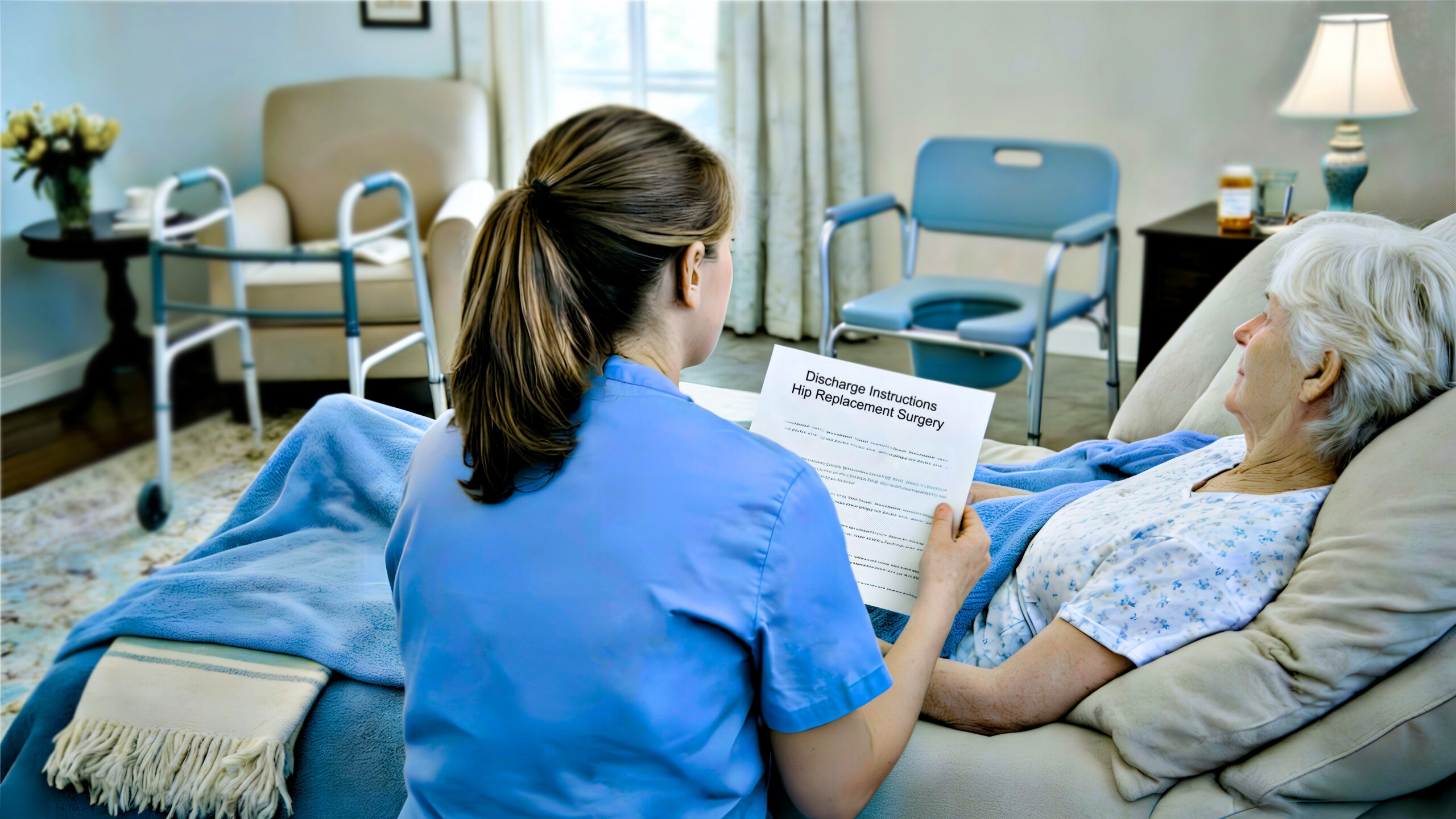
At All Heart Home Care, our caregivers are experienced in post-surgery home care, including hip and knee replacements, cardiac procedures, and abdominal surgeries. We work alongside your healthcare team to ensure discharge instructions are followed precisely and warning signs are caught early.

As a veteran-owned, nurse-led agency serving San Diego County since 2014, we understand that recovery is about more than checking boxes on a care plan. It’s about helping your loved one feel safe, supported, and confident as they heal.

Planning for an upcoming surgery? Already home and need support?

Call us at (619) 736-4677 for a free consultation. We serve families throughout San Diego County. Same-day starts are available for urgent situations.

Disclaimer: This article is for informational purposes only and does not constitute medical advice. Always follow the specific instructions from your surgical team and contact your healthcare provider with any concerns about your recovery. Post-surgical care should be coordinated with your medical team.

Share:

More Posts

About the author

Eric Barth, co-founder and CEO of All Heart Home Care San Diego

Eric Barth

CEO, All Heart Home Care

Eric Barth is the founder and CEO of All Heart Home Care™, an award-winning San Diego agency dedicated to providing compassionate, personalized in-home care for seniors. As the writer behind the All Heart Home Care blog, Eric shares insights and stories drawn from years of hands-on experience leading one of San Diego’s most trusted home care teams.

Additional FAQ's on Digital Home Care System

Yes. HITRUST CSF Certified security—same gold standard hospitals use. More secure than paper.

Extremely rare (99.9% uptime), but caregivers can work in offline mode if connectivity is temporarily lost. Care continues without interruption. Documentation syncs automatically when connection returns.

Caregivers document throughout their shift in real-time. Notes are typically finalized and visible in Family Room within minutes of the caregiver clocking out.

We can set up Family Room accounts for as many family members as you want—local siblings, children in other states, anyone you authorize. Everyone sees the same information. No limit on number of accounts.

Yes. Family Room includes secure document storage. Upload medical records, insurance cards, POLST forms, medication lists, doctor’s instructions, photos—anything important. All authorized family members can access these documents. No more searching for forms.

We update the digital care plan immediately, and all caregivers receive instant notification of changes. This is one of the biggest advantages over paper—updates reach everyone simultaneously, not gradually over days or weeks.

Absolutely. Family Room is a tool for families who want it, not a replacement for human connection. We’re always reachable by phone at (619) 736-4677. Many families use both—portal for quick updates, phone calls for detailed conversations.

We train every caregiver on the WellSky mobile app before their first shift. The app is intuitive—designed specifically for caregivers, not engineers. If someone can text and use GPS navigation, they can use our caregiver app. And we provide ongoing support.

Yes. The Family Room care calendar shows upcoming shifts with caregiver names and times. You’ll know exactly who’s coming and when. No more surprise caregiver switches.

Use the two-way messaging feature in Family Room. Send your message, and the caregiver receives an instant notification on their mobile app. They’ll see it and can respond or confirm receipt immediately.

Yes. All notes are searchable. Want to see every mention of “appetite” from the past month? Type it in the search bar and find all relevant notes instantly. No more flipping through pages of handwritten entries.

You can access the complete care history from the day Family Room access began. Review notes from last week, last month, or since care started. Historical data helps identify patterns over time.

Family members cannot delete caregiver documentation—that’s protected and maintained by All Heart for record-keeping purposes. You can delete your own uploaded documents, but we can often recover those if needed within a certain timeframe.

With your authorization, we can provide limited Family Room access to healthcare providers. This allows better coordination between home care and medical teams. You control exactly who has access and what they can see.

Family Room works both ways. You can access it through any web browser (Chrome, Safari, Firefox, Edge) on your computer, or download the mobile app for easier access on your phone or tablet. Your choice.

All authorized Family Room users see the same care information—we can’t create different access levels for different family members. However, you (as the primary contact) control who gets Family Room access in the first place. If family dynamics are challenging, you decide who receives login credentials.

The messaging system shows when messages are delivered and read. You’ll see confirmation that the caregiver received and opened your message. For critical information, you can also call our office to ensure the message was received.

Yes. You can print individual shift notes, date ranges, or specific types of documentation (like Change of Condition reports) directly from Family Room. Useful for doctor appointments or insurance purposes.

If your loved one transitions to hospice, hospital, or another care setting, we can maintain your Family Room access for a transition period so you have complete records. After care ends, we provide a final data export if requested, then access is closed according to your wishes and legal requirements.

Yes. Family Room is accessible from anywhere with internet connection. If you’re traveling abroad, you can still check on your loved one’s care. The system works globally.

Family Room doesn’t support selective information sharing—all authorized users see the same care documentation. For private family communications, you’d need to use personal email, phone, or text outside the Family Room system.

Change of Condition reports automatically alert you when caregivers document significant health changes. For custom alerts (like specific behaviors or situations), talk to our office—we may be able to add special flags to your loved one’s care plan that trigger notifications.

We typically set up Family Room access during your initial care planning meeting, before the first caregiver shift. You’ll have login credentials and a brief tutorial on how to use the portal. Most families are viewing their first shift notes within 24 hours of care beginning.

Complete Security & Privacy Information

HITRUST CSF Certification - What This Means

HITRUST CSF (Common Security Framework) is the most rigorous security certification in healthcare. It's harder to achieve than HIPAA compliance alone. This certification requires:

Why it matters: If it’s secure enough for hospital patient records, it’s secure enough for your loved one’s care information.

Bank-Level Encryption Explained

Data in Storage (At Rest):

Data in Transmission (In Transit):

What this means: Even if someone intercepted the data (extremely unlikely), they would only see scrambled, unreadable information.

Strict Access Controls

Who Can See What

Family Member Access:

Caregiver Access:

Staff Access:

Audit Trail:

HIPAA Compliance - Federal Protection

The Health Insurance Portability and Accountability Act (HIPAA) establishes federal standards for protecting health information. Our compliance includes:

Privacy Rule Compliance:

Security Rule Compliance:

Breach Notification:

Business Associate Agreements:

Continuous Backup & Disaster Recovery

Automated Backups:

Redundancy:

Disaster Recovery Plan:

What this guarantees: Your loved one’s care information is never truly lost. Even if an entire data center were destroyed, complete backups exist elsewhere.

99.9% Uptime Guarantee

What “99.9% uptime” means:

Monitoring:

If the system goes down:

Multi-Factor Authentication (Optional)

For families who want extra security, we can enable multi-factor authentication (MFA):

Mobile Device Security

Caregiver Phones:

Your Devices:

Security Incident Response

In the extremely unlikely event of a security concern:

Digital vs. Paper Security Comparison

Security Concern
Paper Binders
WellSky_Color

Who can read it?

Anyone who enters the home

Only authorized users

Can it be lost?

✔︎ — permanently

— backed up continuously

Can it be damaged?

✔︎ — spills, fires, floods

— stored digitally

Is access tracked?

✔︎ Access logged & audited

Encryption protection?

✔︎ — bank-level encryption

Updates reach everyone?

— printing/distribution delays

✔︎ — instant notification

Survives disasters?

✔︎ — redundant backups

HIPAA compliant?

— difficult to prove

✔︎ — certified & audited

Can be accidentally discarded?

✔︎

— requires a password

Verdict: Digital is significantly more secure than paper in every measurable way.

Common Security Questions

"What if I forget my password?"

Secure password reset process via email or phone verification. We verify your identity before resetting access.

"Can hackers access the system?"

Multiple layers of security make unauthorized access extremely difficult. Regular penetration testing simulates attacks to identify and fix vulnerabilities before hackers can exploit them.

"What if my phone is stolen?"

Change your password immediately from any other device. The thief would still need your password to access Family Room.

"Can All Heart staff see my credit card information?"

No. Payment processing is handled by a separate, PCI-compliant payment processor. We never see or store your full credit card number.

"What happens to the data if I stop using All Heart?"

Your data is retained according to legal requirements (typically 7 years for healthcare records), then securely deleted. You can request a copy of your data at any time.

This isn’t just secure—it’s among the most secure systems available in healthcare.

Your information is safer in our digital system than it ever was in a paper binder sitting on a kitchen counter.

Complete Care Plan Contents:

Care Goals & Priorities

Emergency Contact Information

Medical Conditions & Health History

Mental Health & Cognitive Status

Medications & Supplements

Mobility & Transfers

Personal Care Routines

Meal Preparation & Dietary Needs

Daily Routines & Schedules

Activities & Engagement

Home Environment Details

Transportation & Driving

Additional Important Information

This comprehensive information ensures every caregiver provides consistent, personalized care from day one.

Tracking health changes that matter.

The Change of Condition form documents significant shifts in your loved one’s health—new symptoms, changes in mobility, behavioral differences, or improvements in their condition. This isn’t about minor day-to-day variations; it’s about meaningful changes that physicians, families, and caregivers need to know about.

Why have a separate form for this?

Instead of searching through weeks of caregiver narratives to find when symptoms started or conditions changed, this form puts all significant health changes in one easy-to-reference place. When doctors ask “when did the difficulty walking begin?” or family members want to understand the progression of a condition, you’ll have clear, dated documentation right at your fingertips.

What gets documented:

Each entry includes:

Why this form matters:

Early detection changes outcomes. When caregivers notice something different—increased confusion, difficulty walking, loss of appetite, or even positive improvements like better mobility—documenting it immediately allows for faster responses.

Your family stays informed about meaningful health changes. Physicians receive accurate updates during appointments instead of relying on memory. Incoming caregivers know exactly what’s changed and what new precautions or assistance your loved one needs.

One form. Complete health timeline. Better care.

Whether tracking a temporary change after a fall or documenting the progression of a chronic condition, the Change of Condition form creates a clear health timeline. This helps everyone—doctors, family members, and our San Diego caregiver team—understand how your loved one’s needs are evolving and respond appropriately.

Proactive monitoring isn’t just good practice. It’s essential senior care.

How the Caregiver Narrative works.

Each caregiver documents their shift using a simple timeline format that captures the essential details of your loved one’s day. This structured approach ensures consistency across all caregivers and makes information easy to find.

What we document in every narrative:

Narrative Format:

Each entry follows this structure:

Why this format works:

This timeline approach provides clear, chronological documentation that’s easy for incoming caregivers to read and understand. Instead of wondering what happened during the previous shift, they can see exactly what your loved one ate, how they felt, what activities they enjoyed, and any health changes observed.

One record. Every shift. Complete continuity.

Whether care is short-term, long-term, or evolving, the Caregiver Narrative ensures nothing gets missed and nothing gets repeated. Your family can review the journal at any time during visits, or we can share photos of recent narratives with long-distance family members who want to stay connected and informed.

Complete transparency and peace of mind, right when you need it.

Your loved one's complete care roadmap, now available digitally.

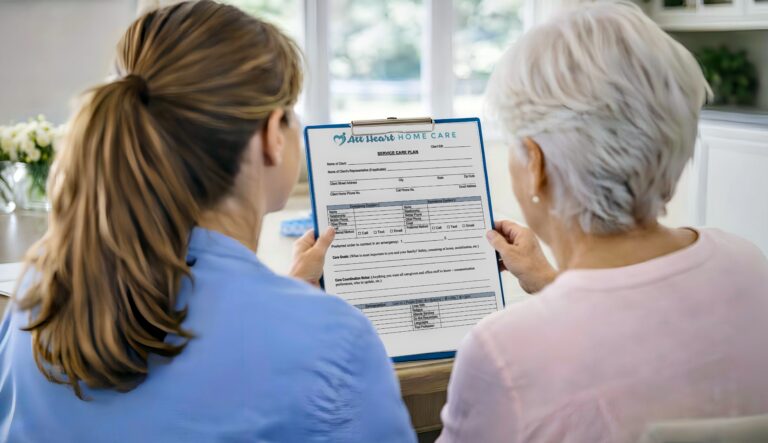
The All Heart Customized Care Plan is completed during your initial assessment and tailored to your loved one’s specific needs, preferences, mobility level, and safety requirements.

Now fully digital and accessible on every caregiver’s phone.

We’ve gone paperless. Your care plan is accessible through our digital platform—caregivers reference it anytime, anywhere. Updates happen in real-time, so when something changes, every caregiver sees it immediately.

What's included:

Care goals, emergency contacts, medical conditions, mental health & cognitive status, medications & supplements, mobility & transfers, personal care routines, meal prep & dietary needs, daily routines, activities & engagement, and home environment details.

One plan. Every caregiver. Consistent care.

This digital approach ensures every San Diego caregiver has the same accurate, up-to-date information from day one—promoting safety, continuity, and person-centered care.

See how we organize care information. This form becomes your loved one’s digital care roadmap.