Exercise is important for everyone, but for individuals living with Parkinson’s disease, it’s far more than a healthy habit—it’s a critical part of maintaining independence, mobility, and quality of life. At All Heart Home Care, we believe in empowering families and clients with the tools and knowledge to thrive.
Ongoing research shows that consistent movement not only improves balance, strength, and flexibility but also relieves non-motor symptoms such as depression, constipation, and fatigue. Notably, emerging evidence suggests that exercise may protect the brain and potentially slow disease progression at the cellular level.
The Growing Importance of Exercise for Parkinson’s
Parkinson’s disease is the fastest-growing neurological disease in the world. By 2040, researchers estimate that more than 12 million people worldwide will live with the condition. In the United States alone, nearly 90,000 people are diagnosed each year—a 50% increase from previous estimates—and by 2030, an estimated 1.2 million Americans will be living with Parkinson’s.
These numbers underscore the urgent need for effective management strategies. Research from the Parkinson’s Foundation Parkinson’s Outcomes Project—the largest-ever clinical study of Parkinson’s—found that individuals who began regular exercise early in their diagnosis, at least 2.5 hours per week, saw a slower decline in quality of life than those who started later.
The takeaway is clear. Establishing a movement routine early on is one of the most powerful tools available for long-term care.
Groundbreaking Research: Exercise May Reverse Brain Changes
Perhaps the most exciting development in Parkinson’s research comes from a 2024 pilot study published by Yale researchers in npj Parkinson’s Disease. The study found that high-intensity exercise not only slowed neurodegeneration but also helped damaged brain cells recover.
After six months of high-intensity aerobic exercise, brain imaging showed that dopamine-producing neurons—the very cells most vulnerable to destruction in Parkinson’s—had preserved their function and produced stronger dopamine signals. Where researchers expected to see decline, they saw improvement.
This finding is remarkable because current Parkinson’s medications only treat symptoms—they don’t change the disease course. Exercise appears to go one step further and may protect the brain at the neuronal level.
What the Research Shows
Multiple studies now support the neuroprotective benefits of exercise for Parkinson’s patients:
- A 2024 analysis in the Journal of Neurology, Neurosurgery and Psychiatry confirmed that exercise addresses both motor symptoms (walking, balance) and non-motor symptoms (depression, anxiety, sleep troubles, cognitive problems)
- Research shows that maintaining at least 150 minutes of moderate or vigorous exercise weekly significantly reduces Parkinson’s risk and improves outcomes for those already diagnosed
- A 2025 meta-analysis found that aerobic exercise at optimal doses demonstrated the greatest improvement in walking velocity for Parkinson’s patients
- PET scans have shown that after six months of aerobic exercise, dopamine levels actually increase in the brain
Neuroprotection refers to the brain’s ability to preserve neurons from deterioration. For people with Parkinson’s, exercise is not just vital to maintaining daily function—it has the potential to change how the disease affects the brain over time.
Official Exercise Guidelines for Parkinson’s
The Parkinson’s Foundation, in collaboration with the American College of Sports Medicine, developed evidence-based exercise recommendations specifically for people with Parkinson’s. These guidelines represent a consensus from 34 exercise professionals and thought leaders in the field.
The recommendations call for 150 minutes (2.5 hours) of moderate to vigorous exercise per week across four domains:
Aerobic Activity:
- 3 days per week for at least 30 minutes per session
- Continuous or intermittent movement at moderate to vigorous intensity
- Examples include walking, biking, swimming, rowing, or dancing
Strength Training:
- 2-3 non-consecutive days per week for at least 30 minutes per session
- 10-15 repetitions for major muscle groups
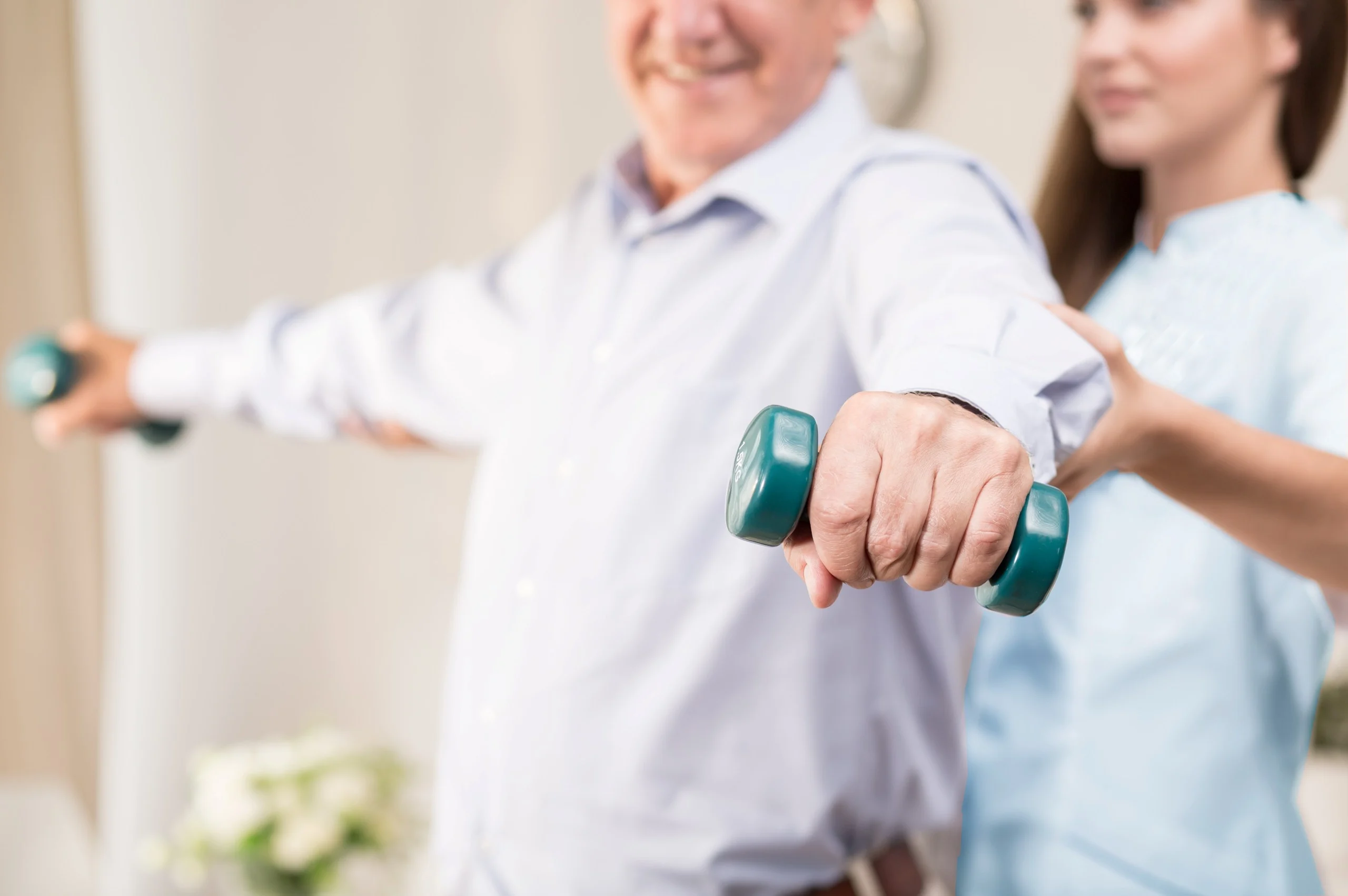
- Focus on resistance, speed, or power using resistance bands or light weights
Balance, Agility, and Multitasking:
- 2-3 days per week with daily integration if possible
- Activities like Tai Chi, yoga, or dual-task training that challenge coordination
Stretching and Flexibility:
- 2-3 days per week, with daily stretching being most effective
- Yoga, guided stretching routines, or gentle range-of-motion exercises
It’s recommended that people with Parkinson’s see a physical therapist who specializes in the disease for a full functional evaluation and personalized recommendations. Exercise should be performed during “on” periods when medication is working effectively.
Types of Parkinson’s-Friendly Exercise Programs
Parkinson’s-focused classes and home-based routines are more available than ever. In 2025, the Parkinson’s Foundation expanded its roster of accredited exercise education providers to include programs such as Dance for PD and Parkinson’s Pointe, joining established programs such as Rock Steady Boxing and PWR! Moves.
Popular exercise options for people with Parkinson’s include:
- Non-contact boxing classes designed specifically for Parkinson’s
- Dance programs that combine movement with music and social connection
- Tai Chi and yoga for balance and mindfulness
- Resistance and treadmill training
- Swimming and water aerobics
- Cycling, including stationary bikes
- Home-based workouts via online platforms or virtual fitness sessions
Many routines combine multiple elements. Whether it’s boxing, Pilates, swimming, or even modified home workouts, the most effective exercise is the one your loved one enjoys and can stick with consistently.
Not everyone starts out active—and that’s okay. Begin with something manageable, like a short daily walk. Progress can be gradual and based on comfort and ability.
Getting Started Safely
Before starting any exercise routine, it’s essential to consult with healthcare providers and, ideally, work with a physical therapist specializing in Parkinson’s care. They can evaluate the current function and guide you through safe exercises tailored to your loved one’s disease stage.
✓ Get a professional evaluation — A physical therapist specializing in Parkinson’s can assess function and create a personalized exercise plan
✓ Track progress — Use a pedometer or smart device to monitor daily steps and gradually build from your baseline
✓ Exercise during “on” periods — Schedule workouts when medication is providing optimal symptom control
✓ Vary the routine — Alternate indoor and outdoor activities to maintain interest and motivation
✓ Find enjoyment — The best exercise is one your loved one actually enjoys doing
The Power of Exercising Together
Having a workout partner or caregiver join can improve motivation and safety. For some, group sessions offer the added benefit of social connection—research shows that the emotional and social support provided in group exercise settings may itself contribute to better outcomes.
Others may benefit from one-on-one coaching or at-home sessions with a trained caregiver. Either way, building a consistent routine, even a light one, creates long-term benefits.
Keys to Successful Parkinson’s Exercise
• Consistency matters more than intensity — Regular moderate exercise provides substantial benefits
• Longer programs yield better results — Studies show that programs lasting 6 months or more demonstrate greater improvements than short-term efforts
• Higher intensity may offer extra benefits — For those able to participate, activities like fast cycling, cardio boxing, or swimming at higher intensities may provide additional neuroprotective effects
• Always include warm-ups and cool-downs — Stretching before and after exercise helps prevent injury
• Adjust as needed — Know your loved one’s limits and modify routines as the disease progresses
Common Challenges and What to Watch For
As Parkinson’s progresses, challenges like reduced flexibility, muscle strength, and endurance may arise. These can affect balance, walking, and posture. But staying active—even in small ways—helps slow these changes.
Safety is paramount. The most frequently reported adverse events during exercise for Parkinson’s patients include falls and pain. Working with a trained in-home caregiver can provide essential support during exercise, especially if your loved one is at risk of falling or fatigue.
▶ Watch for freezing episodes — Sudden inability to move can occur during walking; caregivers should know how to help
▶ Monitor fatigue levels — Adjust intensity and duration based on how your loved one feels
▶ Ensure proper supervision — Having support available during exercise reduces fall risk
The Brain-Boosting Benefits of Movement
Exercise doesn’t just improve physical strength. It can support brain function, protect neurons, and increase dopamine efficiency. Long-term movement helps the brain compensate for the changes caused by Parkinson’s through a process called neuroplasticity—essentially, the brain forming new connections and pathways.
Clinical studies have shown that exercise can:
- Improve walking speed, balance, and posture
- Support hand coordination and motor skills
- Increase dopamine production and usage in the brain
- Reduce tremors and stiffness
- Elevate mood and reduce fatigue
- Improve sleep quality
- Enhance memory and cognitive function
Research has also shown that exercise induces brain neurotrophic factors—proteins like BDNF (brain-derived neurotrophic factor) and GDNF (glial-derived neurotrophic factor)—that may mediate neuroprotective effects. These factors support the survival and growth of neurons.
How All Heart Home Care Can Help
Our San Diego-based caregivers are trained to assist clients with Parkinson’s in building and maintaining safe, effective exercise routines right from the comfort of home. Whether it’s daily walks, balance practice, stretching, or simply keeping your loved one encouraged and engaged, we’re here to help them stay active—and connected—every step of the way.
As a veteran-owned, nurse-led agency serving San Diego County since 2014, All Heart Home Care understands the unique challenges that Parkinson’s presents. Our caregivers provide compassionate, knowledgeable support that helps maintain independence and quality of life.
If your family is exploring Parkinson’s care at home, we’d be honored to support you. Let’s create a personalized care plan that supports strength, safety, and peace of mind.
Call All Heart Home Care at (619) 736-4677 for a free consultation.
References
- Yale School of Medicine. (2024). High-intensity Exercise May Reverse Neurodegeneration in Parkinson’s Disease. medicine.yale.edu
- Parkinson’s Foundation & American College of Sports Medicine. (2021). Parkinson’s Exercise Recommendations. parkinson.org
- Parkinson’s Foundation. Statistics: Prevalence & Incidence. parkinson.org
- Xie S, Yuan Y, Wang J, et al. (2025). Optimal dose and type of exercise improve walking velocity in adults with Parkinson’s disease. Scientific Reports. nature.com
- Langeskov-Christensen M, et al. (2024). Exercise and Parkinson’s Disease (Analysis). Journal of Neurology, Neurosurgery and Psychiatry.
- The Michael J. Fox Foundation for Parkinson’s Research. New Estimate Suggests 25 Million People with Parkinson’s by 2050. michaeljfox.org