You chose the assisted living facility carefully.
The rooms looked clean. The staff seemed friendly. The gardens were immaculate.
You felt confident that your parent would be safe.
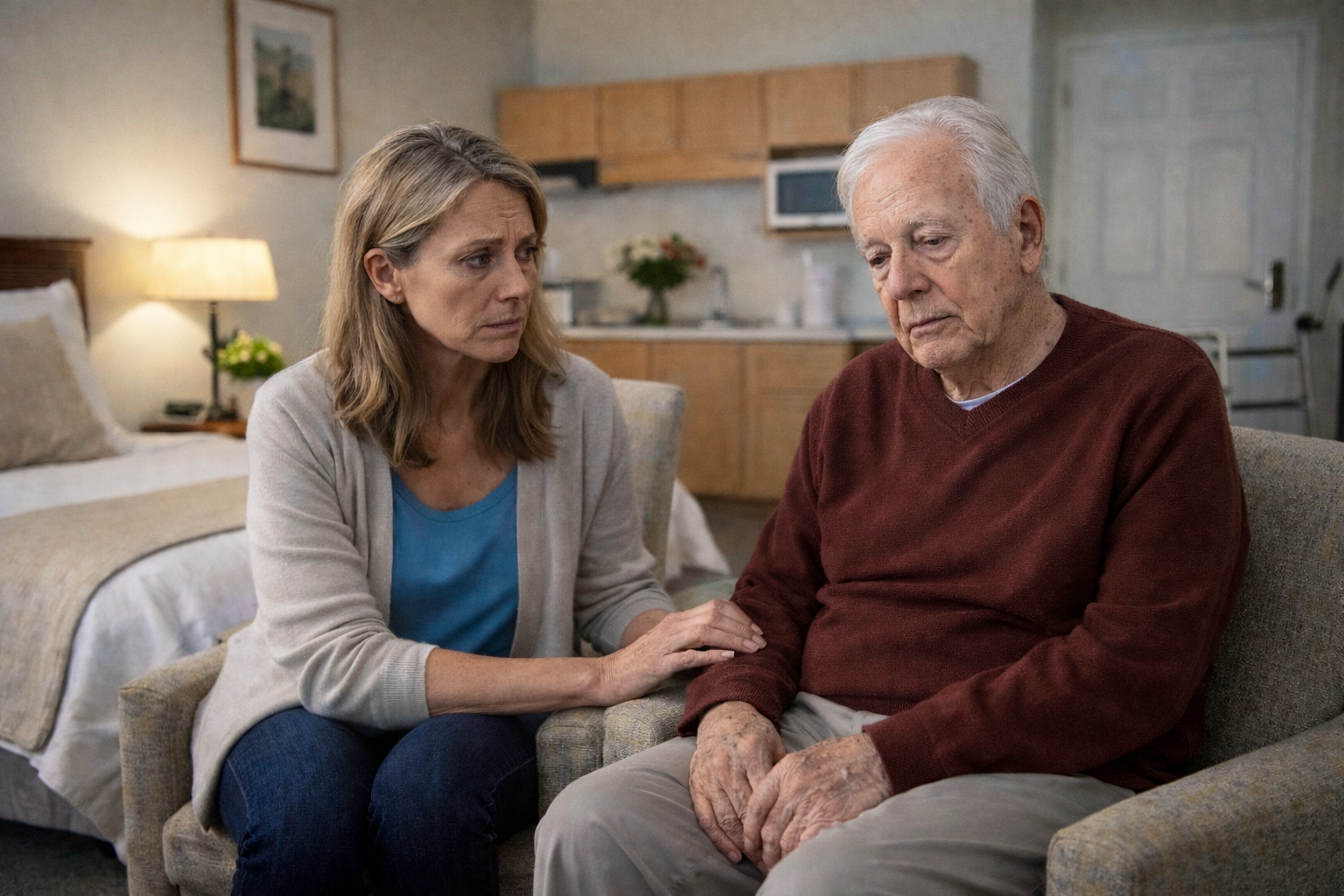
Then you started noticing things.
Weight loss. Unexplained bruises. A behavior change. Unanswered calls at night. That unsettling feeling that something wasn’t right.
You’re not imagining it. And you’re not alone.
Every year, millions of families place their trust — and their loved ones — in assisted living facilities. Many provide excellent care. But a disturbing number don’t. And by the time families realize something is wrong, the damage may already be done.
This guide provides the frightening facts families need to know — and, more importantly, the specific steps you can take to monitor, protect, and advocate for your loved one if they’re in an assisted living facility.
The Disturbing Statistics You Should Know
Elder Abuse Is Shockingly Common
The numbers paint a troubling picture:
| Statistic | Source |
|---|---|
| 1 in 10 Americans over 60 experience some form of elder abuse | National Center on Elder Abuse |
| Only 1 in 24 cases are ever reported | Elder abuse research |
| Nearly 44% of nursing home residents report being abused | Cureus study |
| 2 in 3 care facility staff members admit to committing abuse in the past year | World Health Organization |
| 12% of staff admit to neglecting residents | World Health Organization |
| 50% of people with dementia experience abuse | National Council on Aging |
The Reporting Gap Is Massive
For every reported case of elder abuse, an estimated 23.5 cases go unreported. Victims often:
- Fear retaliation from staff
- Have cognitive impairments that prevent them from communicating what happened
- Don’t want to be a “burden” to family
- Don’t recognize the abuse as abuse
Facility Staff Admissions Are Alarming
A survey of 577 nurses and nursing aides in long-term care facilities found:
- 81% witnessed emotional abuse
- 40% committed at least one act of emotional abuse in 12 months
- 70% saw coworkers yelling at residents
- 50% noticed coworkers insulting residents
Frightening Fact #1: Understaffing Puts Residents at Serious Risk
The reality: Most assisted living facilities operate with far fewer staff than residents actually need — and the problem is getting worse.
The Staffing Crisis by the Numbers
- More than 90% of nursing homes and assisted living facilities are struggling to maintain adequate staffing levels (2025 data)
- Average staff-to-resident ratios range from 1:6 to 1:20, depending on facility and state
- Only 12 states have minimum staffing ratio requirements
- Night shifts are typically the least staffed, when residents are most vulnerable
What Understaffing Means for Your Loved One
- Longer wait times for toileting help, leading to incontinence issues and skin breakdown
- Rushed or skipped personal care (bathing, grooming)
- Missed medications or medication errors
- Falls without anyone present to help
- Residents left sitting in wheelchairs for hours
- Slower response to health emergencies
- Social isolation as staff don’t have time to interact
A Real-World Example (2025)
A Minnesota investigation found that a memory care facility had only one staff person caring for 16 residents during night shifts. When a 100-year-old resident fell and broke her hip, camera footage showed she cried out in pain for hours with minimal staff attention.
How to Protect Your Loved One
✓ Ask about staffing ratios for every shift, including overnight
✓ Visit at odd hours (evenings, weekends, early mornings) to see actual staffing levels
✓ Watch staff behavior — do they seem rushed, stressed, overwhelmed?
✓ Ask residents and families what nights are like
✓ Request documentation of actual staffing patterns, not just minimums
Frightening Fact #2: Infections Spread Rapidly in Congregate Settings
The reality: When dozens of elderly residents live in proximity, infectious diseases can sweep through a facility with devastating speed.
Why Assisted Living Facilities Are High-Risk
- Close quarters — residents share dining areas, common spaces, and sometimes rooms
- Staff moving from room to room — caregivers can inadvertently transmit pathogens
- Immunocompromised residents — aging immune systems can’t fight infections effectively
- Limited isolation capacity — facilities may lack space to quarantine properly
- Inadequate infection control — not all facilities follow best practices
The “Tripledemic” Reality (2024–2025)
The 2024–2025 respiratory illness season saw simultaneous surges of:
- COVID-19
- Influenza (flu)
- RSV (respiratory syncytial virus)
CDC data (January 2026) shows respiratory illness activity is currently at “very high” levels nationally, with influenza activity elevated and increasing across the country.
Common Infections in Assisted Living
| Infection | Risk |
|---|---|
| Influenza | Can be fatal in older adults; spreads rapidly |
| COVID-19 | Ongoing concern; seniors at highest risk for severe outcomes |
| RSV | Especially dangerous for seniors with chronic conditions |
| Pneumonia | A common complication of respiratory infections |
| Norovirus | Highly contagious gastrointestinal illness |
| C. diff | Severe intestinal infection; often linked to antibiotic use |
| MRSA | Antibiotic-resistant staph infection |
| Scabies | Highly contagious skin condition |
| UTIs | Common in immobile residents; can cause confusion |
Outbreaks Can Be Deadly
Respiratory viruses, such as the flu, can spread rapidly in care facilities. When an outbreak occurs:
- Multiple residents may become sick within days
- Pneumonia often follows, particularly in frail seniors
- Death rates can spike, especially among residents with chronic conditions
- Facilities may restrict visitation, isolating residents further
How to Protect Your Loved One
✓ Ensure vaccinations are current — flu, COVID-19, RSV (if eligible), pneumonia
✓ Ask about the facility’s infection control protocols
✓ Inquire about outbreak history — how many outbreaks in the past year, and how were they handled?
✓ Monitor for signs of illness — fever, cough, confusion, decreased appetite
✓ Ask if staff are required to stay home when sick
✓ Check ventilation and cleanliness during visits
Frightening Fact #3: Communication Problems Leave Needs Unmet
The reality: Many assisted living residents — particularly those with dementia — cannot effectively communicate their needs, pain, or concerns. When staff aren’t trained to recognize non-verbal cues, serious problems go unnoticed.
Why Communication Gaps Are Dangerous
- Dementia affects expression — residents may not be able to describe pain, illness, or mistreatment
- Staff turnover means inconsistency — new caregivers don’t know residents’ baseline behaviors
- Rushed staff miss subtle signs — a grimace, withdrawal, or change in eating habits
- Residents may fear retaliation — and stay silent about poor treatment
- Language barriers — staff and residents who don’t share a language
What Gets Missed
- Developing infections (UTIs often present as confusion, not typical symptoms)
- Pain from falls, injuries, or medical conditions
- Dehydration and malnutrition
- Depression and emotional distress
- Abuse or mistreatment
The Dementia Vulnerability
Residents with cognitive impairment are especially vulnerable:
- Nearly 50% of residents with dementia experience abuse or neglect
- They may be unable to report what’s happening to them
- Behavioral changes are often dismissed as “part of the disease”
- Staff may not have adequate dementia training
How to Protect Your Loved One
✓ Learn your loved one’s baseline — normal behavior, appetite, sleep patterns, mood
✓ Document changes — keep a notebook of observations at each visit
✓ Ask direct questions — “How are you being treated? Is anyone unkind to you?”
✓ Watch for non-verbal cues — withdrawal, flinching, fearfulness around certain staff
✓ Check their body — bruises, skin issues, weight changes (see checklist below)
✓ Build relationships with staff — engaged families often get better communication
Frightening Fact #4: Many Facilities Can’t Handle Serious Health Conditions
The reality: Assisted living facilities often market to residents with complex needs but lack the training, staffing, or willingness to provide the necessary care.
The “Acuity Creep” Problem
Industry research shows:
- 87% of assisted living facilities report increased acuity (higher care needs) among residents
- Many seniors who once would have been in nursing homes now choose assisted living
- Staffing and training haven’t kept pace with increasing medical complexity
- Facilities may accept residents whose needs exceed their capabilities, then struggle to provide adequate care
What This Means for Your Loved One
Residents with conditions like:
- Dementia / Alzheimer’s disease
- Parkinson’s disease
- Diabetes requiring careful management
- Heart failure
- Chronic respiratory conditions
…may not receive the specialized care they need — or may be abruptly discharged when their needs “exceed what the facility can provide.”
The Wandering Crisis
For dementia patients specifically, the risks are stark:
- 60% of people with dementia will wander at least once
- Since 2018, more than 2,000 people have wandered away from assisted living and memory care facilities
- Nearly 100 died — many from exposure to extreme heat or cold
- Elopements occur at even the most expensive facilities
- 1 in 10 facilities were cited for failing to report missing residents properly
How to Protect Your Loved One
✓ Ask specific questions about staff training for your loved one’s conditions
✓ Inquire about elopement prevention — wander management systems, door alarms, GPS policies
✓ Consider a GPS tracker your loved one can wear (see technology section below)
✓ Understand discharge policies — when would they ask your loved one to leave?
✓ Have a backup plan if the facility can’t meet increasing needs
Frightening Fact #5: Regulatory Oversight Is Weak and Inconsistent
The reality: Unlike nursing homes, which face federal oversight, assisted living facilities are regulated at the state level — and many states provide minimal protection.
The Oversight Gap
- No comprehensive federal regulation of assisted living facilities
- Each state creates its own rules — standards vary dramatically
- Inspection frequency ranges from annual to every five years (Nebraska)
- Only 29 states make inspection reports publicly accessible online
- Only 22 states post complaint information
- Penalties for violations are often minimal
Enforcement Is Often Toothless
When an 88-year-old woman with dementia wandered away from an Arizona assisted living facility and died in 104-degree heat, the state fined the facility $500 — the maximum it could impose.
In Connecticut, South Dakota, and Wyoming, the state has no authority to fine.
Violations Often Go Unaddressed
A 2025 New York State Comptroller report found:
- Many required inspections were late or missing
- Investigation reports missed deadlines
- 101 of 569 allegations couldn’t be verified because investigations weren’t completed
- Substantiated allegations included resident-on-resident abuse
How to Protect Your Loved One
✓ Research inspection history (if your state makes it available)
✓ Contact your state’s Long-Term Care Ombudsman for information
✓ Search for news reports about the facility
✓ Don’t assume a clean record means quality care — many problems go unreported
✓ Be your loved one’s advocate — report concerns promptly
Your Family Monitoring Checklist: What to Check at Every Visit
Use this systematic checklist to identify potential problems early:
Physical Appearance
✓ Skin — bruises, cuts, bedsores, rashes, redness
✓ Hair — clean and groomed
✓ Nails — fingernails and toenails trimmed and clean
✓ Teeth/mouth — oral hygiene, mouth sores
✓ Overall hygiene — smells clean, clothes fresh
Body Check (for Dementia or Limited Communication)
✓ Arms and legs — bruises, grab marks
✓ Back — bedsores, especially if mobility is limited
✓ Buttocks/tailbone — common bedsore locations
✓ Feet — check between toes for skin issues
Weight and Nutrition
✓ Track weight — ask staff for monthly weights or bring a portable scale
✓ Watch for loose clothing — may indicate weight loss
✓ Observe meal times if possible
✓ Check for dehydration — dry lips, dark urine, confusion
Mood and Behavior
✓ Overall mood — more withdrawn, fearful, or agitated
✓ Fear around certain staff — flinching or anxiety
✓ Sleep patterns — exhausted or sleeping excessively
✓ Interest in activities — stopped participating in things they enjoyed
Environment
✓ Room cleanliness — dust, trash, odors
✓ Bathroom cleanliness — sanitary condition
✓ Call button accessibility — can your loved one reach it?
✓ Personal belongings — anything missing?
Staff Interactions
✓ Staff demeanor — friendly, rushed, dismissive?
✓ Knowledge of your loved one — name, preferences, needs
✓ Response time — how quickly do they answer call buttons?
✓ Interaction quality — do staff talk to residents or at them?
Technology Tools to Monitor Safety
Modern technology can help families maintain vigilance even from a distance:
GPS Trackers for Dementia Patients
For loved ones at risk of wandering, GPS tracking devices can provide peace of mind.
Types of trackers:
- Wearable watches — look like regular watches; harder to remove
- Pendant trackers — worn around the neck
- Clip-on devices — attach to clothing or a belt
- Shoe inserts — hidden tracking for those who resist wearing devices
Key features to look for:
- Real-time location tracking
- Geofencing alerts — notification when your loved one leaves a designated area
- Long battery life — at least 24–48 hours
- SOS button — allows your loved one to call for help
- Fall detection — alerts you if a fall is detected
- Two-way communication — some devices allow voice calls
Popular options (2025–2026):
- AngelSense GPS Tracker
- Theora Connect Watch
- Family1st GPS Tracker
- Apple AirTag (basic tracking, works with iPhone network)
Market growth: The dementia GPS tracker market is projected to grow from $450 million (2023) to $1.2 billion by 2032 — reflecting increasing demand for safety monitoring.
Room Cameras
Many families now install cameras in their loved one’s room.
Benefits
- Visual verification of care quality
- Documentation in case problems occur
- Peace of mind for distant family members
Considerations
- Check facility policies — some prohibit cameras
- Review your state’s laws regarding recording
- Inform the facility and staff
- Position to maintain some privacy
Important: Camera footage has helped families identify:
- Staff neglect (not responding to calls)
- Rough handling during care
- Extended periods without attention
- Medication administration problems
Communication Apps
- Video calling (FaceTime, Zoom) — see your loved one’s face and environment
- Photo requests — ask staff to send daily photos
- Medication tracking apps — monitor whether meds are being given
Proxy Visitors
If you can’t visit regularly:
- Hire a professional caregiver to visit and monitor
- Ask a local friend or family member to stop by
- Use a geriatric care manager for professional assessment
What to Do If You Suspect Problems
Step 1: Document Everything
- Write down what you observe (dates, times, details)
- Take photos of any concerns (bruises, room conditions)
- Save camera footage if you have it
- Keep a log of all communications with staff
Step 2: Address with Facility Management
- Request a meeting with the administrator
- Present your concerns clearly and specifically
- Ask for a written response and action plan
- Follow up in writing after the meeting
Step 3: Contact the Ombudsman
Every state has a Long-Term Care Ombudsman Program — advocates who:
- Investigate complaints
- Help resolve disputes
- Protect resident rights
- Provide information about your options
Find yours: Call the Eldercare Locator at 1-800-677-1116.
Step 4: Report to State Agencies
Contact:
- Adult Protective Services (APS) — for suspected abuse or neglect
- State licensing agency — for regulatory violations
- Law enforcement — if you suspect criminal abuse
Step 5: Consider Legal Consultation
An elder law attorney can advise you on:
- Your loved one’s rights
- Options for holding facilities accountable
- Whether legal action is appropriate
Red Flags That Require Immediate Action
Contact authorities immediately if you observe:
▶ Unexplained injuries — especially repeated ones
▶ Signs of physical abuse — bruises in unusual patterns, grab marks
▶ Signs of sexual abuse — bruising around genitals, STIs
▶ Significant unexplained weight loss
▶ Severe dehydration
▶ Bedsores (pressure ulcers) — can indicate neglect
▶ Unsanitary living conditions
▶ Medication errors or missed medications
▶ Your loved one expresses fear of the staff
▶ Staff seem hostile, dismissive, or retaliatory when you raise concerns
▶ Your loved one goes missing, even briefly
The Home Care Alternative: Why Many Families Choose to Keep Loved Ones Home
Given these frightening realities, many families choose professional home care instead of assisted living.
Advantages of Home Care
✓ Familiar environment — your loved one stays home, reducing confusion and anxiety
✓ One-on-one attention — a dedicated caregiver focused solely on your loved one
✓ Family oversight — you maintain direct control and can monitor care closely
✓ Personalized care — tailored to needs and preferences
✓ Consistent caregivers — relationships with the same people, not rotating staff
✓ Lower infection risk — less exposure to facility-wide outbreaks
✓ Flexibility — adjust hours as needs change
✓ Transparent costs — pay for what you need, with fewer hidden fees
What Professional Home Care Provides
All the services assisted living offers — without the institutional setting:
- Personal care (bathing, dressing, grooming, toileting)
- Medication reminders and pharmacy coordination
- Meal preparation customized to dietary needs
- Light housekeeping and laundry
- Transportation to appointments and errands
- Companionship and cognitive engagement
- 24-hour care available when needed
When Home Care Makes Sense
- Your loved one strongly prefers to stay home
- You want direct oversight of care
- Your loved one has specific needs that benefit from personalized attention
- You’re concerned about infection risk
- You want to avoid an institutional environment
- Care needs are moderate (less than 24/7 skilled nursing)
We Can Help
At All Heart Home Care, we provide the personalized, compassionate care your loved one deserves — in the comfort and safety of their own home.
Our caregivers are:
- Thoroughly screened and background-checked
- Trained in dementia care and chronic condition management
- Supervised and accountable
- Committed to treating your loved one with dignity
Our services include:
✓ Personal care (bathing, dressing, grooming)
✓ Medication reminders
✓ Meal preparation (including special diets)
✓ Light housekeeping and laundry
✓ Transportation
✓ Companionship and engagement
✓ 24-hour care when needed
Our rates begin at $37/hour — with transparent pricing, no hidden fees, and the peace of mind that comes from knowing your loved one is safe.
Call us at (619) 736-4677 for a free in-home consultation.
We’ll assess your loved one’s needs, explain our services, and help you determine if home care is the right choice for your family.
Resources
Reporting Abuse or Neglect:
- Eldercare Locator: 1-800-677-1116 (find local resources)
- National Elder Fraud Hotline: 1-833-FRAUD-11 (financial abuse)
- Adult Protective Services: Search “Your State APS”
- Long-Term Care Ombudsman: ltcombudsman.org
Facility Research:
- Your state’s licensing agency — search “Your State assisted living licensing”
- Medicare Care Compare (for nursing homes): medicare.gov/care-compare
Family Support:
- AARP Caregiving Resources: aarp.org/caregiving
- Alzheimer’s Association: alz.org | 24/7 Helpline: 1-800-272-3900
- National Council on Aging: ncoa.org
Key Data Sources (2024–2026)
✓ National Center on Elder Abuse — 1 in 10 Americans over 60 experience abuse
✓ World Health Organization — 2 in 3 facility staff admit committing abuse; 12% admit neglect
✓ Cureus study — 44% of nursing home residents report being abused
✓ National Council on Aging — 50% of dementia patients experience abuse
✓ 2025 Minnesota Star Tribune investigation — understaffing and at-fault deaths in assisted living
✓ CDC respiratory illness data (January 2026) — “very high” activity levels nationally
✓ 2025 New York State Comptroller report — oversight gaps and uninvestigated complaints
✓ Washington Post investigations (2023–2024) — 2,000+ elopements; nearly 100 deaths
✓ McKnight’s Long-Term Care News survey — 87% of facilities report increased acuity
✓ Dementia GPS tracker market research — $450M (2023) to $1.2B projected by 2032
✓ Industry staffing data — 90%+ of facilities report staffing shortages