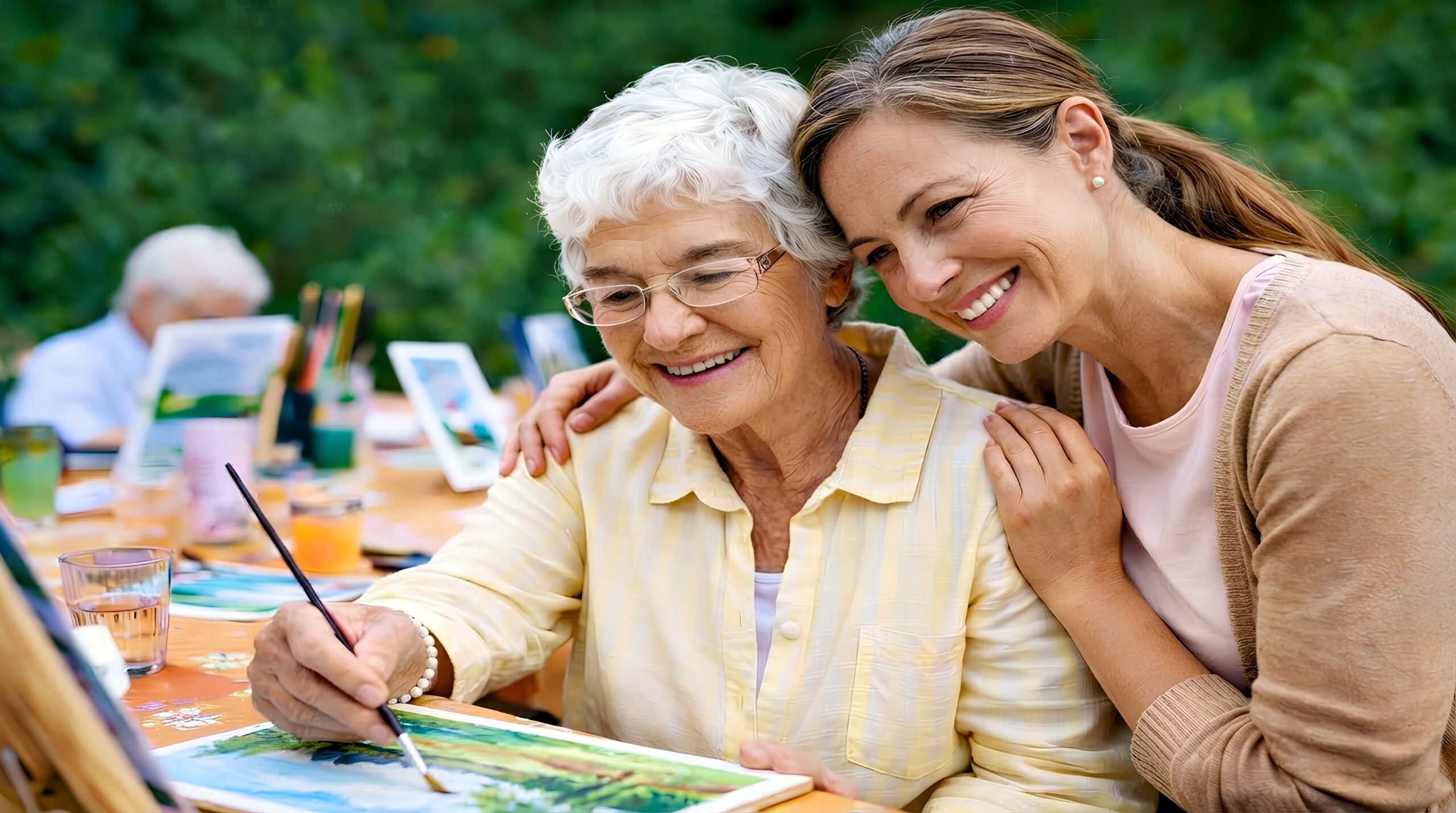
Art therapy for seniors is one of the most effective — and underused — approaches to improving mental and emotional health in older adults. Whether your loved one is struggling with depression, recovering from a major life change, or living with Alzheimer’s disease, creative expression offers something that medication alone cannot.
A way to communicate without words. A path to joy when everything else feels hard. A connection to identity when memory starts to fade.
The research is compelling. A 2025 meta-analysis published in Nature Mental Health found that group arts interventions led to moderate reductions in both depression and anxiety among older adults — effects comparable to some established therapies. And for those with dementia, art therapy has been shown to reduce agitation, improve quality of life, and provide meaningful engagement even in advanced stages.
This article explains what art therapy is, how it works, and how it can help your loved one thrive.
What Is Art Therapy for Seniors?
Art therapy uses the creative process — painting, drawing, sculpting, collage, and other art forms — as a therapeutic tool. Unlike casual crafting, art therapy is intentional. It’s designed to help people express emotions, process experiences, and improve mental well-being.
Here’s the important distinction: art therapy isn’t about creating beautiful artwork. It’s about the process, not the product. Your loved one doesn’t need artistic talent or experience. They simply need to engage.
When creating art, seniors often enter a mental state called flow, also known as “the zone.” In this state, they become fully immersed in the activity. Time seems to pass differently. Worries fade into the background. The mind quiets.
This focused, engaged state has measurable benefits for mental health, stress reduction, and overall quality of life.
Formal Art Therapy vs. Art Activities
There’s a difference between formal art therapy and general art activities — though both can benefit seniors:
• Formal art therapy — Conducted by a licensed art therapist (typically with a master’s degree), formal sessions use specific techniques to address psychological goals. The therapist guides the process and helps interpret the experience.
• Art activities — Informal creative activities like painting, coloring, or crafting provide many of the same benefits without the structured therapeutic framework. Research shows that even casual art engagement can improve mood, reduce anxiety, and enhance well-being.
Both approaches work. What matters most is that your loved one engages regularly in creative expression — whether guided by a professional or supported by a caregiver at home.
What Does Research Show About Art Therapy for Seniors?
The evidence for art therapy in older adults has grown significantly in recent years. Here’s what the latest research tells us:
Depression and Anxiety
A 2025 systematic review and meta-analysis published in Nature Mental Health examined 39 controlled studies involving over 3,300 older adults. The findings were striking:
- Group arts interventions produced a moderate reduction in depression (Cohen’s d = 0.70)
- Participants also experienced a moderate reduction in anxiety
- Effects were consistent across different types of creative arts, including visual arts, music, and dance
These effect sizes are clinically meaningful — comparable to some established psychological treatments for depression.
Dementia and Alzheimer’s Disease
For seniors with cognitive impairment, art therapy offers unique benefits. A 2025 meta-analysis of 26 randomized controlled trials found that art-based interventions:
- Improved global cognition
- Reduced overall neuropsychiatric symptoms
- Showed particularly strong effects for reducing depressive symptoms
A separate 2021 systematic review found that 94% of studies reported improvements in quality of life among dementia patients who participated in creative art therapy. More than half showed reductions in behavioral and psychological symptoms.
Why does art therapy work so well for Alzheimer’s and dementia? Because artistic ability is often preserved even when language and memory fail. Art provides a non-verbal outlet for expression, identity, and connection — allowing people to communicate meaning when words no longer come easily.
Cognitive Function and Brain Health
Creating art engages multiple brain systems simultaneously — visual processing, motor control, memory, emotional regulation, and creative problem-solving. This multi-system activation may help maintain cognitive function and build cognitive reserve.
Studies suggest that regular engagement in mentally stimulating activities, such as art, can slow cognitive decline and help maintain independence longer.
6 Key Benefits of Art Therapy for Seniors
Based on the research, here are the primary benefits of art therapy for older adults:
1. Reduces Depression and Anxiety
Depression affects an estimated 20% of adults over 65. The World Health Organization reports that around 14% of adults aged 70 and over live with a mental disorder, with depression and anxiety being the most common.
Art therapy provides a healthy outlet for processing difficult emotions — grief, loss, fear, loneliness — without requiring verbal expression. The creative process itself produces positive neurochemical changes, reducing stress hormones and increasing feelings of calm and accomplishment.
2. Provides Non-Verbal Expression
Many seniors struggle to articulate their feelings — whether due to cognitive decline, communication difficulties after stroke, or simply generational reluctance to discuss emotions.
Art bypasses these barriers. A painting can express fear or sadness that words cannot capture. A sculpture can represent hope or resilience. This non-verbal expression can be profoundly therapeutic, especially for those who find traditional talk therapy challenging.
3. Improves Quality of Life
Across multiple studies, the most consistent finding is improved quality of life. Art therapy gives seniors:
- A sense of purpose and accomplishment
- Opportunities for self-expression and identity reinforcement
- Enjoyable activities to look forward to
- Something meaningful to share with others
4. Maintains Fine Motor Skills
Holding a paintbrush, shaping clay, cutting paper for collage — these activities require and strengthen fine motor coordination. For seniors at risk of declining hand dexterity, regular art practice helps maintain these crucial skills.
This is particularly valuable for those with Parkinson’s disease, where maintaining motor function is a constant focus.
5. Reduces Behavioral Symptoms in Dementia
Agitation, anxiety, and restlessness are common behavioral symptoms in dementia. Art therapy provides calming, structured engagement that can significantly reduce these challenging behaviors — without medication.
Research shows that the focused attention required during creative activities has a settling effect, helping manage symptoms that often cause distress for both the person with dementia and their caregivers.
6. Promotes Social Connection
About one in four older adults experiences social isolation or loneliness — a significant risk factor for depression and cognitive decline. Group art activities provide natural opportunities for social interaction and shared experience.
Even when done one-on-one with a caregiver, art creates a shared activity and conversation starter. Displaying artwork gives seniors something to show visitors, sparking pride and connection.
What Conditions Can Art Therapy Help?
Art therapy for seniors can be beneficial for a wide range of conditions:
Alzheimer’s Disease and Dementia
Even when a person with dementia struggles to remember names, dates, or recent conversations, they can still create art. They access muscle memory, emotional centers, and visual-spatial abilities that remain intact even as other functions decline.
Art therapy helps dementia patients:
- Express emotions they can no longer verbalize
- Experience moments of clarity and engagement
- Reduce agitation and anxiety
- Maintain a sense of identity
- Connect with caregivers and family members
Depression
Depression is not a normal part of aging — but it is common. Major life changes like retirement, loss of a spouse, declining health, or moving from a family home can trigger depressive episodes.
Art therapy helps by providing positive experiences, a sense of accomplishment, and healthy emotional outlets. The creative process engages the mind in ways that break the cycle of negative rumination that often accompanies depression.
Grief and Loss
Up to 25% of seniors experience depressive symptoms following the loss of a loved one. Art therapy provides a safe way to process grief — creating memorial pieces, expressing complicated emotions, and finding meaning after loss.
PTSD and Trauma
Post-traumatic stress disorder can affect seniors who experienced trauma earlier in life — including military veterans, survivors of abuse, or those who lived through catastrophic events. Art therapy allows trauma survivors to process experiences that may be too painful to discuss directly.
Chronic Pain and Illness
Living with chronic pain or serious illness takes a psychological toll. Art therapy provides distraction, emotional processing, and moments of joy that help seniors cope with ongoing health challenges.
For those receiving hospice support, art therapy can be particularly meaningful — offering opportunities for legacy projects, life review, and emotional expression during a difficult time.
Types of Art Activities That Work Best
Different art forms offer different benefits. Here are some of the most effective options for seniors:
✓ Painting and drawing — Watercolors are particularly accessible, forgiving of “mistakes,” and require minimal hand strength. Acrylics offer vibrant colors and quick drying. Colored pencils work well for those who prefer more control.
✓ Coloring books — Adult coloring books with simple, large designs provide structure while still allowing creativity. They’re excellent for those who feel intimidated by a blank sheet of paper.
✓ Collage — Cutting and arranging images from magazines requires less fine motor precision and allows creative expression without drawing skills. Collage is also excellent for life review and memory activities.
✓ Clay and sculpting — Working with clay is tactile, sensory, and soothing. It engages different brain areas than two-dimensional art and can be particularly calming for those who are restless or agitated.
✓ Simple crafts — Knitting, crocheting, woodworking, and other crafts engage similar creative processes. For those with established hobbies, continuing these activities provides both creative expression and a sense of identity.
✓ Sensory art — For those with advanced dementia or significant limitations, finger painting, playing with textured materials, or simple mark-making can still provide benefits.
Adapting Activities to Ability Level
The key to successful art therapy is matching activities to your loved one’s current abilities:
Early cognitive decline or mild limitations:
- More complex projects with multiple steps
- Challenging techniques to learn
- Independent work with minimal guidance
Moderate impairment:
- Simpler projects with clear steps
- Assistance with setup and some techniques
- Limited choices (2-3 colors, not 20)
Advanced impairment:
- Very simple, sensory activities
- Process-focused rather than outcome-focused
- Hand-over-hand assistance as needed
Tips for Art Therapy at Home
You don’t need a professional art therapist to bring creative activities into your loved one’s life. Here’s how to make art therapy part of home care:
✓ Focus on enjoyment, not perfection — Never critique the artwork. The goal is engagement and expression, not creating museum-worthy pieces.
✓ Provide encouragement — Positive reinforcement keeps seniors motivated. Comment on the colors they chose, the effort they’re making, or simply that they seem to be enjoying themselves.
✓ Display their work — Hanging artwork where they can see it reinforces a sense of accomplishment and identity. It also gives them something to talk about with visitors.
✓ Create a routine — Regular art sessions — even just 20-30 minutes a few times per week — provide structure and something to look forward to.
✓ Make it accessible — Set up a dedicated space with easy-to-reach supplies. Use adaptive tools, such as thick-handled brushes or non-spill paint cups, if needed.
✓ Join in — Creating art alongside your loved one makes it a shared experience rather than an “activity” being done to them. It also provides natural conversation and connection.
References
- Quinn, E.A., et al. (2025). Group arts interventions for depression and anxiety among older adults: a systematic review and meta-analysis. Nature Mental Health, 3(3), 374-386. doi.org/10.1038/s44220-024-00368-1
- Zhuo, X., et al. (2025). Effects of an art-based intervention in older adults with dementia: a randomized controlled trial. Scientific Reports, 15, 10406. doi.org/10.1038/s41598-025-95051-5
- Emblad, S.Y.M. & Mukaetova-Ladinska, E.B. (2021). Creative Art Therapy as a Non-Pharmacological Intervention for Dementia: A Systematic Review. Journal of Alzheimer’s Disease Reports, 5, 353-364. PMC8203286
- World Health Organization. (2025). Mental health of older adults. who.int
- Jalali, A., et al. (2024). Global prevalence of depression, anxiety, and stress in the elderly population: a systematic review and meta-analysis. BMC Geriatrics, 24, 809. doi.org/10.1186/s12877-024-05311-8
Bring Creative Care Home
Art therapy for seniors doesn’t require special equipment or professional training. It simply requires time, encouragement, and someone willing to sit alongside your loved one while they create.
At All Heart Home Care, our caregivers understand that meaningful engagement is just as important as physical care. We help seniors explore creative activities, set up art supplies, participate in projects together, and — just as importantly — clean up afterward so families don’t have to worry about the mess.
Whether your loved one needs a few hours of respite care each week or more comprehensive 24-hour support, we build personalized care plans that include activities like art therapy alongside assistance with daily needs.
Call us at (619) 736-4677 to learn how we can help your loved one thrive at home.
Disclaimer: This article is for informational purposes only and does not constitute medical advice. Art therapy should complement, not replace, professional mental health treatment when needed. Always consult with qualified healthcare providers about your loved one’s specific needs.