

How to Communicate with Someone Who Has Dementia: A Practical Guide for Families

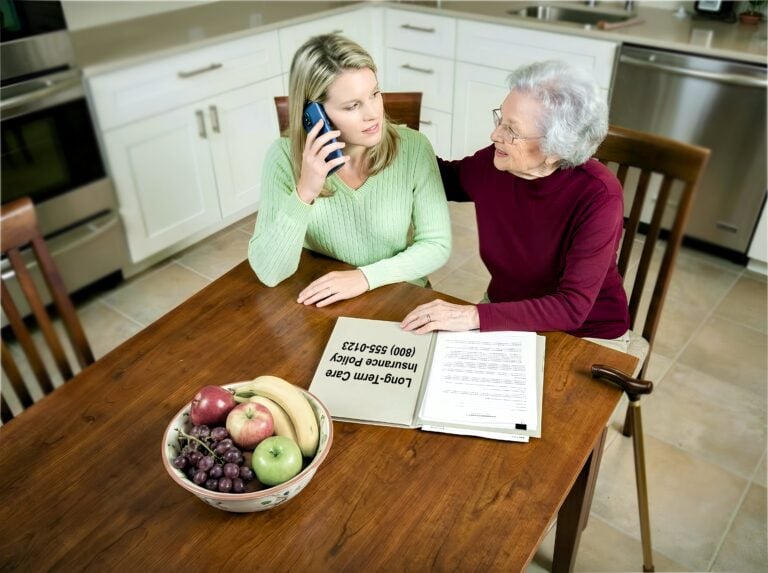
Communicating with dementia - family caregiver talking to elderly parent

Communicating with dementia patients is one of the most challenging — and most heartbreaking — experiences families face.

You ask your mom what she wants for dinner. She stares at you, frustrated, struggling to find words. After a long pause, she says something that doesn’t quite answer your question.

You try again. She gets agitated. You get frustrated. The conversation ends with both of you feeling defeated.

Sound familiar?

Communication breakdowns are one of the most common challenges families face when caring for someone with dementia. The person you’ve known your whole life suddenly can’t find words, misunderstands what you’re saying, or responds in ways that don’t make sense.

Here’s what most families don’t realize: The problem isn’t that your loved one can’t communicate. It’s that dementia changes how they communicate — and if we don’t adapt our approach, we’re essentially speaking different languages.

This guide will help you understand why communication changes, which strategies actually work (backed by research), and how to maintain meaningful connections at every stage of the disease.


Why Dementia Changes Communication

Dementia doesn’t just affect memory. It disrupts the brain’s language centers — the areas responsible for finding words, forming sentences, understanding speech, and processing complex information.

Think of the brain like a complex electrical system. In a healthy brain, messages travel smoothly between regions. In a brain affected by dementia, some circuits are blocked or damaged. Sometimes signals find a clear path; other times, they get stuck.

This explains why someone with dementia might:

  • Answer clearly one moment and struggle the next
  • Understand a question but be unable to form a response
  • Use the wrong word without realizing it
  • Become overwhelmed by too much information at once
  • Respond to your tone and body language more than your words

The most important thing to understand: The emotional part of the brain remains intact much longer than language abilities. Your loved one may not understand your words — but they absolutely feel your frustration, your patience, your love.


Common Communication Challenges

As dementia progresses, families typically encounter these challenges:

Word-finding difficulties

  • Pausing mid-sentence, searching for words
  • Substituting incorrect words (“hand me the…thing”)
  • Describing objects instead of naming them (“the thing you drink from”)
  • Using familiar words repeatedly

Comprehension problems

  • Difficulty following conversations, especially with multiple people
  • Confusion when given multiple instructions at once
  • Taking longer to process what was said
  • Misinterpreting sarcasm, jokes, or abstract language

Conversation difficulties

  • Repeating stories, questions, or statements
  • Losing train of thought
  • Withdrawing from conversations
  • Reverting to a first language (in bilingual individuals)

Important: Vision and hearing loss — common in older adults — make these challenges even harder. Always ensure hearing aids are working and glasses are clean before assuming communication problems are dementia-related.


The Golden Rule: Validate, Don’t Correct

The most important shift families need to make is moving from correcting to validating.

What is validation therapy?

Validation therapy is a communication approach developed by social worker Naomi Feil that focuses on empathy, acceptance, and meeting the person with dementia in their reality — rather than constantly pulling them back to ours.

Research published in 2024 found that validation techniques, such as affirmations and verbalizing understanding, were significantly more likely to elicit cooperative responses than correcting or contradicting. Non-validating communication was associated with increased resistance and distress.

The core principle: When someone with dementia says something that isn’t factually true, respond to the feeling behind the words rather than correcting the facts.

Examples of Validation vs. Correction

Situation: Mom says, “I need to pick up the kids from school.”

✗ Don’t say: “Mom, your kids are grown. They’re in their 50s now. You don’t need to pick anyone up.”

✓ Do say: “You were always such a good mom. Tell me about picking up the kids — what was their favorite after-school snack?”

Situation: Dad accuses someone of stealing his wallet (which he misplaced).

✗ Don’t say: “No one stole your wallet. You probably just forgot where you put it.”

✓ Do say: “That must be frustrating. Let me help you look for it. Where do you usually keep important things?”

Situation: Your spouse asks about their deceased parent as if they’re still alive.

✗ Don’t say: “Your mother passed away 10 years ago, remember?”

✓ Do say: “You’re thinking about your mom. What’s your favorite memory of her?”


The Do’s and Don’ts of Communicating with Dementia Patients

Do’s

Give short, one-sentence explanations — Break complex information into simple chunks.

Allow plenty of time for response — Then triple it. Rushing creates anxiety.

Repeat instructions exactly the same way — Rephrasing forces them to process new information.

Offer simple choices — “Would you like coffee or tea?” not “What do you want to drink?”

Respond to feelings, not facts — Acknowledge the emotion behind what they’re saying.

Use positive phrasing — “Let’s walk this way” instead of “Don’t go that way.”

Maintain eye contact — Get at their level if they’re seated.

Use touch appropriately — A gentle hand on the arm can be reassuring.

Accept blame gracefully — “I’m sorry, I forgot to tell you” can defuse tension.

Practice 100% forgiveness — They’re not trying to frustrate you. The disease is causing this.

Don’ts

Don’t reason or argue — You cannot logic someone out of dementia symptoms.

Don’t confront or correct — Correcting damages trust without improving memory.

Don’t remind them they forget — Reminders just highlight their disability over and over.

Don’t quiz them — “Do you remember who I am?” causes anxiety and shame.

Don’t take it personally — Hurtful words are symptoms, not character judgments.

Don’t talk over them — Include them in conversations, even if they can’t fully participate.

Don’t use baby talk — They’re adults who deserve respect and dignity.

Don’t have important conversations when they’re tired — Cognitive abilities fluctuate throughout the day.


Communication Strategies by Stage

Communication needs change as dementia progresses. Here’s how to adapt your approach at each stage.

Early Stage: Supporting Independence

In early-stage dementia, your loved one can still participate in meaningful conversations and social activities. They may have occasional word-finding difficulties or repeat stories, but they’re largely able to communicate.

Strategies for early stage:

  • Don’t assume they can’t communicate — Many people function well in this stage
  • Be patient when they search for words — Don’t finish their sentences unless they ask for help
  • Include them in decisions — They can still express preferences and participate in planning
  • Use humor appropriately — Laugh with them, not at them
  • Keep them socially engaged — Isolation accelerates decline
  • Use photos and objects to prompt memories — Visual cues support conversation

Middle Stage: Simplify and Support

Middle-stage dementia is typically the longest stage and can last for many years. Communication becomes more challenging — your loved one may confuse words, get frustrated easily, or have difficulty following conversations.

Strategies for middle stage:

  • Approach from the front — Identify yourself by name each time
  • Speak slowly and clearly — But don’t raise your voice unless they have hearing loss
  • Use one-on-one conversation — Minimize distractions and background noise
  • Ask yes/no questions — “Are you hungry?” not “What do you want to eat?”
  • Use visual cues — Point to objects, show pictures, demonstrate actions
  • Go with the flow — Join their reality rather than forcing them into yours
  • Watch for non-verbal cues — Behavior often communicates what words cannot

Late Stage: Connect Through the Senses

In late-stage dementia, verbal communication may be minimal or absent. But your loved one can still feel your presence, hear your voice, and respond to sensory experiences.

Strategies for late stage:

  • Focus on emotional connection — Your tone matters more than your words
  • Use touch — Hold their hand, gently stroke their arm, give a soft massage
  • Play familiar music — Songs from their past can evoke powerful responses
  • Read aloud — Even if they don’t understand the words, your voice is comforting
  • Use pleasant scents — Familiar smells can trigger positive memories
  • Show photos and videos — Visual connection remains meaningful
  • Simply be present — Your company matters, even in silence

Special Considerations by Dementia Type

Different types of dementia affect communication in different ways.

Alzheimer’s Disease

  • Memory loss is the primary challenge — they may not remember recent conversations
  • Word-finding difficulties are common
  • Repetition is expected — answer the same question patiently each time

Lewy Body Dementia

  • Cognitive abilities fluctuate dramatically — they may be lucid one hour and confused the next
  • Visual hallucinations are common — don’t argue about what they see
  • Movement difficulties may affect their ability to speak clearly

Vascular Dementia

  • Executive function (planning, organizing) is often affected more than memory
  • May have difficulty following multi-step instructions
  • Physical symptoms (weakness on one side) may also affect speech

Frontotemporal Dementia

  • Personality and behavior changes may be more prominent than memory loss
  • Some forms specifically affect language (primary progressive aphasia)
  • May say inappropriate things or lose social awareness — this is the disease, not their character

Parkinson’s Disease Dementia

  • Soft, mumbled speech is common due to motor symptoms
  • Facial expressions may be reduced (“masked face”), making emotions harder to read
  • Allow extra time — both thinking and speaking may be slowed

When Communication Becomes Frustrating

Even with the best strategies, there will be difficult moments. Here’s how to handle them:

When you feel frustrated:

  • Take a deep breath before responding
  • It’s okay to step away briefly — say “I’ll be right back” and take a moment
  • Remember: they’re not doing this on purpose
  • Your frustration is valid — caregiving is hard

When they become agitated:

  • Stay calm — your anxiety increases theirs
  • Lower your voice and slow your speech
  • Redirect to a pleasant topic or activity
  • If a topic is causing distress, try again later

When nothing seems to work:

  • Try a different time of day — cognitive abilities fluctuate
  • Try a different approach or sensory channel (visual instead of verbal)
  • Accept that some days will be harder than others
  • Seek support — you shouldn’t do this alone

Taking Care of Yourself

Communication challenges are emotionally exhausting. Caregiver burnout is real — and it affects your ability to communicate effectively.

Get respite — Regular breaks are essential, not optional

Join a support group — Connecting with others who understand helps immensely

Learn and practice — These communication skills improve with time

Forgive yourself — You won’t get it right every time, and that’s okay

Celebrate small victories — A moment of connection is meaningful, even if brief


How Professional Caregivers Can Help

Professional caregivers trained in dementia communication can provide crucial support — both hands-on care and relief for family members.

At All Heart Home Care, our caregivers receive specialized training in dementia communication techniques, including:

  • Validation therapy approaches
  • Stage-specific communication strategies
  • Techniques for managing challenging behaviors
  • Understanding different types of dementia and how they affect communication
  • Creating meaningful activities and engagement

If you’re struggling with communication challenges or simply need a break, call us at (619) 736-4677 for a free in-home consultation.

As a veteran-owned, nurse-led agency serving San Diego families since 2014, we understand that quality dementia care is about more than physical tasks — it’s about maintaining connection, dignity, and quality of life.


References

  1. Campbell, K.M., Coleman, C.K., & Williams, K. (2024). Responses of Persons Living with Dementia to Caregiver Validating Communication: A Secondary Analysis. Research and Theory for Nursing Practice, 38(1), 28-42. doi.org/10.1891/RTNP-2022-0154
  2. Sunjaya, A.M., et al. (2025). Communication strategies for delivering personalised dementia care and support: a mixed-methods systematic review. Age and Ageing, 54(5). doi.org/10.1093/ageing/afaf120
  3. Alzheimer’s Association. Communication and Alzheimer’s. alz.org/help-support/caregiving/daily-care/communications
  4. Harvard Health Publishing. (2025). Bridging the gap: Dementia communication strategies. health.harvard.edu
  5. Validation Training Institute. vfvalidation.org
  6. Harris, C., et al. (2024). What are the communication guidelines for people with dementia and their carers on the internet and are they evidence based? Dementia, 24(3), 577-594. doi.org/10.1177/14713012241292486

Disclaimer: This article is for informational purposes only and is not intended as medical advice. Communication strategies should be adapted to each individual’s specific situation, stage of dementia, and personal preferences. Consult with healthcare professionals for guidance on your loved one’s specific needs.

Share:

More Posts

About the author

Eric Barth, co-founder and CEO of All Heart Home Care San Diego

Eric Barth

CEO, All Heart Home Care

Eric Barth is the founder and CEO of All Heart Home Care™, an award-winning San Diego agency dedicated to providing compassionate, personalized in-home care for seniors. As the writer behind the All Heart Home Care blog, Eric shares insights and stories drawn from years of hands-on experience leading one of San Diego’s most trusted home care teams.

Additional FAQ's on Digital Home Care System

Yes. HITRUST CSF Certified security—same gold standard hospitals use. More secure than paper.

Extremely rare (99.9% uptime), but caregivers can work in offline mode if connectivity is temporarily lost. Care continues without interruption. Documentation syncs automatically when connection returns.

Caregivers document throughout their shift in real-time. Notes are typically finalized and visible in Family Room within minutes of the caregiver clocking out.

We can set up Family Room accounts for as many family members as you want—local siblings, children in other states, anyone you authorize. Everyone sees the same information. No limit on number of accounts.

Yes. Family Room includes secure document storage. Upload medical records, insurance cards, POLST forms, medication lists, doctor’s instructions, photos—anything important. All authorized family members can access these documents. No more searching for forms.

We update the digital care plan immediately, and all caregivers receive instant notification of changes. This is one of the biggest advantages over paper—updates reach everyone simultaneously, not gradually over days or weeks.

Absolutely. Family Room is a tool for families who want it, not a replacement for human connection. We’re always reachable by phone at (619) 736-4677. Many families use both—portal for quick updates, phone calls for detailed conversations.

We train every caregiver on the WellSky mobile app before their first shift. The app is intuitive—designed specifically for caregivers, not engineers. If someone can text and use GPS navigation, they can use our caregiver app. And we provide ongoing support.

Yes. The Family Room care calendar shows upcoming shifts with caregiver names and times. You’ll know exactly who’s coming and when. No more surprise caregiver switches.

Use the two-way messaging feature in Family Room. Send your message, and the caregiver receives an instant notification on their mobile app. They’ll see it and can respond or confirm receipt immediately.

Yes. All notes are searchable. Want to see every mention of “appetite” from the past month? Type it in the search bar and find all relevant notes instantly. No more flipping through pages of handwritten entries.

You can access the complete care history from the day Family Room access began. Review notes from last week, last month, or since care started. Historical data helps identify patterns over time.

Family members cannot delete caregiver documentation—that’s protected and maintained by All Heart for record-keeping purposes. You can delete your own uploaded documents, but we can often recover those if needed within a certain timeframe.

With your authorization, we can provide limited Family Room access to healthcare providers. This allows better coordination between home care and medical teams. You control exactly who has access and what they can see.

Family Room works both ways. You can access it through any web browser (Chrome, Safari, Firefox, Edge) on your computer, or download the mobile app for easier access on your phone or tablet. Your choice.

All authorized Family Room users see the same care information—we can’t create different access levels for different family members. However, you (as the primary contact) control who gets Family Room access in the first place. If family dynamics are challenging, you decide who receives login credentials.

The messaging system shows when messages are delivered and read. You’ll see confirmation that the caregiver received and opened your message. For critical information, you can also call our office to ensure the message was received.

Yes. You can print individual shift notes, date ranges, or specific types of documentation (like Change of Condition reports) directly from Family Room. Useful for doctor appointments or insurance purposes.

If your loved one transitions to hospice, hospital, or another care setting, we can maintain your Family Room access for a transition period so you have complete records. After care ends, we provide a final data export if requested, then access is closed according to your wishes and legal requirements.

Yes. Family Room is accessible from anywhere with internet connection. If you’re traveling abroad, you can still check on your loved one’s care. The system works globally.

Family Room doesn’t support selective information sharing—all authorized users see the same care documentation. For private family communications, you’d need to use personal email, phone, or text outside the Family Room system.

Change of Condition reports automatically alert you when caregivers document significant health changes. For custom alerts (like specific behaviors or situations), talk to our office—we may be able to add special flags to your loved one’s care plan that trigger notifications.

We typically set up Family Room access during your initial care planning meeting, before the first caregiver shift. You’ll have login credentials and a brief tutorial on how to use the portal. Most families are viewing their first shift notes within 24 hours of care beginning.

Complete Security & Privacy Information

HITRUST CSF Certification - What This Means

HITRUST CSF (Common Security Framework) is the most rigorous security certification in healthcare. It's harder to achieve than HIPAA compliance alone. This certification requires:

Why it matters: If it’s secure enough for hospital patient records, it’s secure enough for your loved one’s care information.

Bank-Level Encryption Explained

Data in Storage (At Rest):

Data in Transmission (In Transit):

What this means: Even if someone intercepted the data (extremely unlikely), they would only see scrambled, unreadable information.

Strict Access Controls

Who Can See What

Family Member Access:

Caregiver Access:

Staff Access:

Audit Trail:

HIPAA Compliance - Federal Protection

The Health Insurance Portability and Accountability Act (HIPAA) establishes federal standards for protecting health information. Our compliance includes:

Privacy Rule Compliance:

Security Rule Compliance:

Breach Notification:

Business Associate Agreements:

Continuous Backup & Disaster Recovery

Automated Backups:

Redundancy:

Disaster Recovery Plan:

What this guarantees: Your loved one’s care information is never truly lost. Even if an entire data center were destroyed, complete backups exist elsewhere.

99.9% Uptime Guarantee

What “99.9% uptime” means:

Monitoring:

If the system goes down:

Multi-Factor Authentication (Optional)

For families who want extra security, we can enable multi-factor authentication (MFA):

Mobile Device Security

Caregiver Phones:

Your Devices:

Security Incident Response

In the extremely unlikely event of a security concern:

Digital vs. Paper Security Comparison

Security Concern
Paper Binders
WellSky_Color

Who can read it?

Anyone who enters the home

Only authorized users

Can it be lost?

✔︎ — permanently

— backed up continuously

Can it be damaged?

✔︎ — spills, fires, floods

— stored digitally

Is access tracked?

✔︎ Access logged & audited

Encryption protection?

✔︎ — bank-level encryption

Updates reach everyone?

— printing/distribution delays

✔︎ — instant notification

Survives disasters?

✔︎ — redundant backups

HIPAA compliant?

— difficult to prove

✔︎ — certified & audited

Can be accidentally discarded?

✔︎

— requires a password

Verdict: Digital is significantly more secure than paper in every measurable way.

Common Security Questions

"What if I forget my password?"

Secure password reset process via email or phone verification. We verify your identity before resetting access.

"Can hackers access the system?"

Multiple layers of security make unauthorized access extremely difficult. Regular penetration testing simulates attacks to identify and fix vulnerabilities before hackers can exploit them.

"What if my phone is stolen?"

Change your password immediately from any other device. The thief would still need your password to access Family Room.

"Can All Heart staff see my credit card information?"

No. Payment processing is handled by a separate, PCI-compliant payment processor. We never see or store your full credit card number.

"What happens to the data if I stop using All Heart?"

Your data is retained according to legal requirements (typically 7 years for healthcare records), then securely deleted. You can request a copy of your data at any time.

This isn’t just secure—it’s among the most secure systems available in healthcare.

Your information is safer in our digital system than it ever was in a paper binder sitting on a kitchen counter.

Complete Care Plan Contents:

Care Goals & Priorities

Emergency Contact Information

Medical Conditions & Health History

Mental Health & Cognitive Status

Medications & Supplements

Mobility & Transfers

Personal Care Routines

Meal Preparation & Dietary Needs

Daily Routines & Schedules

Activities & Engagement

Home Environment Details

Transportation & Driving

Additional Important Information

This comprehensive information ensures every caregiver provides consistent, personalized care from day one.

Tracking health changes that matter.

The Change of Condition form documents significant shifts in your loved one’s health—new symptoms, changes in mobility, behavioral differences, or improvements in their condition. This isn’t about minor day-to-day variations; it’s about meaningful changes that physicians, families, and caregivers need to know about.

Why have a separate form for this?

Instead of searching through weeks of caregiver narratives to find when symptoms started or conditions changed, this form puts all significant health changes in one easy-to-reference place. When doctors ask “when did the difficulty walking begin?” or family members want to understand the progression of a condition, you’ll have clear, dated documentation right at your fingertips.

What gets documented:

Each entry includes:

Why this form matters:

Early detection changes outcomes. When caregivers notice something different—increased confusion, difficulty walking, loss of appetite, or even positive improvements like better mobility—documenting it immediately allows for faster responses.

Your family stays informed about meaningful health changes. Physicians receive accurate updates during appointments instead of relying on memory. Incoming caregivers know exactly what’s changed and what new precautions or assistance your loved one needs.

One form. Complete health timeline. Better care.

Whether tracking a temporary change after a fall or documenting the progression of a chronic condition, the Change of Condition form creates a clear health timeline. This helps everyone—doctors, family members, and our San Diego caregiver team—understand how your loved one’s needs are evolving and respond appropriately.

Proactive monitoring isn’t just good practice. It’s essential senior care.

How the Caregiver Narrative works.

Each caregiver documents their shift using a simple timeline format that captures the essential details of your loved one’s day. This structured approach ensures consistency across all caregivers and makes information easy to find.

What we document in every narrative:

Narrative Format:

Each entry follows this structure:

Why this format works:

This timeline approach provides clear, chronological documentation that’s easy for incoming caregivers to read and understand. Instead of wondering what happened during the previous shift, they can see exactly what your loved one ate, how they felt, what activities they enjoyed, and any health changes observed.

One record. Every shift. Complete continuity.

Whether care is short-term, long-term, or evolving, the Caregiver Narrative ensures nothing gets missed and nothing gets repeated. Your family can review the journal at any time during visits, or we can share photos of recent narratives with long-distance family members who want to stay connected and informed.

Complete transparency and peace of mind, right when you need it.

Your loved one's complete care roadmap, now available digitally.

The All Heart Customized Care Plan is completed during your initial assessment and tailored to your loved one’s specific needs, preferences, mobility level, and safety requirements.

Now fully digital and accessible on every caregiver’s phone.

We’ve gone paperless. Your care plan is accessible through our digital platform—caregivers reference it anytime, anywhere. Updates happen in real-time, so when something changes, every caregiver sees it immediately.

What's included:

Care goals, emergency contacts, medical conditions, mental health & cognitive status, medications & supplements, mobility & transfers, personal care routines, meal prep & dietary needs, daily routines, activities & engagement, and home environment details.

One plan. Every caregiver. Consistent care.

This digital approach ensures every San Diego caregiver has the same accurate, up-to-date information from day one—promoting safety, continuity, and person-centered care.

See how we organize care information. This form becomes your loved one’s digital care roadmap.