
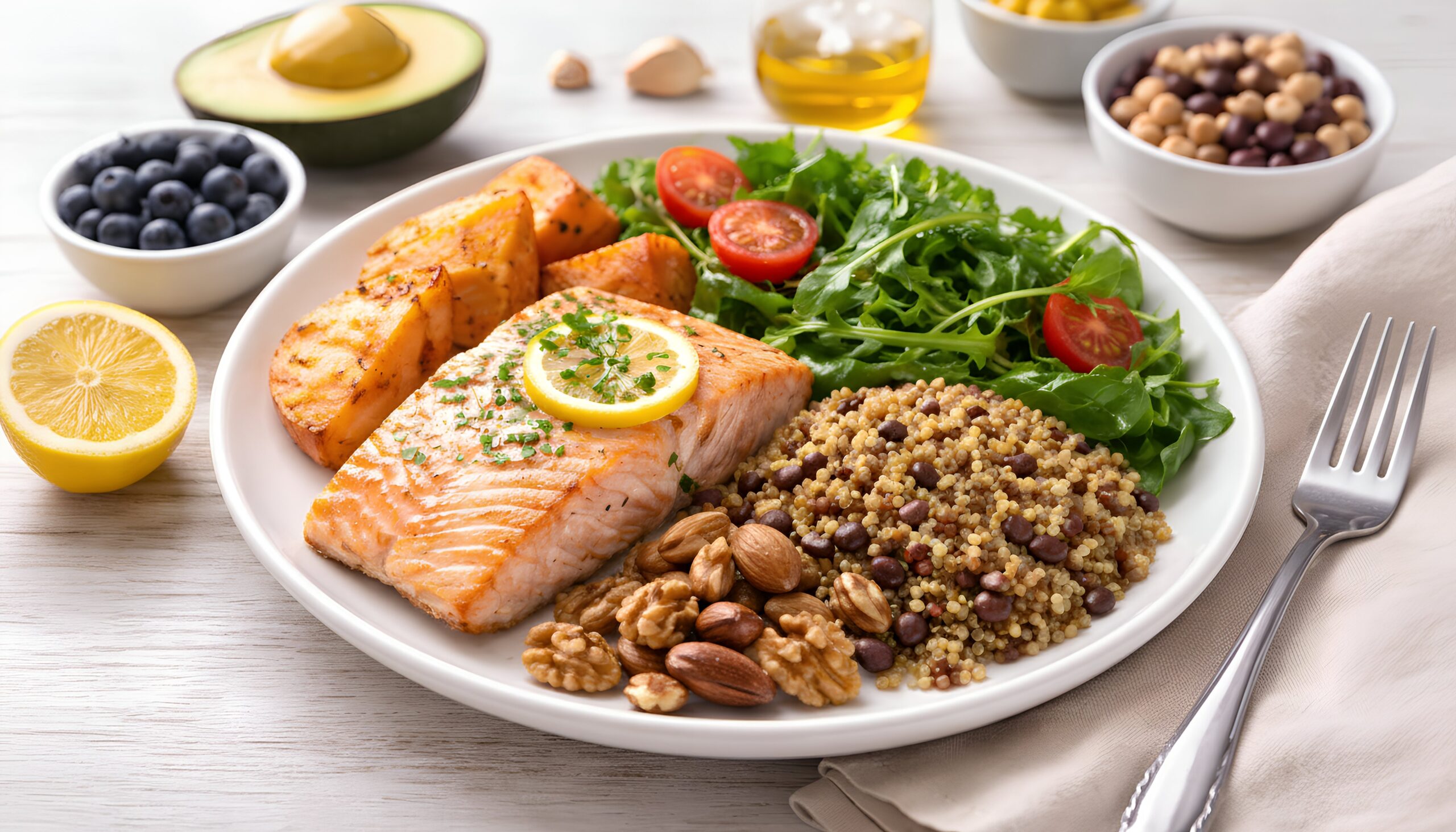
Want to know the cheapest, most accessible way to help your loved one live longer?
It’s not an expensive supplement. It’s not a cutting-edge medication. It’s not even exercise (though that helps too).
It’s what they eat.
A longevity diet for seniors isn’t about restriction or deprivation. It’s about choosing foods that protect the brain, strengthen the heart, and reduce inflammation—the same foods that people in the world’s healthiest communities have eaten for generations.
Research spanning decades and continents reveals a striking pattern: the foods we eat in our 60s, 70s, and 80s have a more profound impact on lifespan than almost any other controllable factor—including genetics.
In fact, the largest study ever conducted on diet and healthy aging—published in Nature Medicine in March 2025—found that people who followed a longevity diet were 86% more likely to reach age 70 in good health and more than twice as likely to remain healthy at 75.
The question isn’t whether diet matters. It’s whether you’re going to act while there’s still time.
The Harvard 30-Year Study: Proof That Diet Determines How We Age
In March 2025, Harvard researchers published the most comprehensive study ever conducted on diet and healthy aging. The findings should change how every family thinks about nutrition.
The Study:
- 105,015 participants tracked for 30 years
- Regular dietary assessments throughout
- Eight different dietary patterns were compared
- Focus on “healthspan”—not just living longer, but staying healthy longer
Unlike previous studies that focused only on lifespan or specific diseases, this research measured healthy aging: reaching age 70 free of chronic disease while maintaining cognitive function, physical ability, and mental health.
The Results Were Striking
People who followed the healthiest dietary pattern (the Alternative Healthy Eating Index) had:
- 86% greater likelihood of healthy aging at age 70
- 2.2 times higher likelihood of healthy aging at age 75
- Better cognitive function in later years
- Greater physical independence
- Lower rates of chronic disease
The study also found that ultra-processed foods—particularly processed meats and sugary beverages—were strongly linked to worse aging outcomes. People who ate the most ultra-processed foods were significantly less likely to maintain physical and cognitive function.
What Made the Difference?
The winning diet emphasized:
- Fruits, vegetables, and whole grains
- Nuts and legumes
- Healthy fats (especially polyunsaturated fatty acids)
- Low-to-moderate fish and certain dairy
- Minimal red meat, processed meat, sugary drinks, and refined grains
How Many Years Can Diet Actually Add?
A 2024 study published in the American Journal of Clinical Nutrition quantified the life expectancy gains from dietary changes across seven countries. The findings were remarkable—and encouraging for families wondering if it’s too late to make changes.
Life Expectancy Gains by Age of Diet Change:
| Age When Diet Improves | Added Life Expectancy |
|---|---|
| Age 40 | 6–10 years |
| Age 60 | 8 years |
| Age 70 | 6–8 years |
| Age 80 | 3–4 years |
The study found that Americans have the greatest opportunity to benefit from dietary changes—largely because the typical American diet is so far from optimal.
The foods that added the most years: legumes, whole grains, and nuts. The foods that subtract the most years: processed meat and sugar-sweetened beverages.
Why Do Japanese Seniors Live So Much Longer?
Japanese women live an average of 87 years. Japanese men live 80 years.
Compare that to the United States:
- American women: 81 years
- American men: 76 years
That’s a 4–6 year gap—and genetics alone can’t explain it.
The 15-Year Japanese Diet Study
Researchers followed 79,594 Japanese adults for 15 years, tracking their diet and health outcomes. Each person received a score based on how closely their diet matched Japan’s official dietary guidelines, which emphasize:
- Vegetables (especially dark leafy greens and sea vegetables)
- Fish and seafood (rich in omega-3 fatty acids)
- Soy products (tofu, edamame, miso)
- Rice (whole grain, not white)
- Green tea (multiple cups daily)
- Fruit (in moderate portions)
- Minimal red meat, processed foods, and added sugar
People who scored highest on diet quality had:
- 15% lower mortality from all causes
- Significantly lower rates of heart disease
- Reduced risk of stroke
- Lower incidence of certain cancers
- Better cognitive function in old age
The most encouraging finding: Benefits emerged even among people who improved their diet later in life. Starting to eat well at 60 still made a measurable difference by 75.
The Blue Zones: Lessons from the World’s Longest-Lived Communities
Scientists have identified five regions around the world where people live significantly longer than average—often reaching 100+ years with remarkable health and vitality. These “Blue Zones” include:
- Okinawa, Japan — Home to the world’s longest-living women
- Sardinia, Italy — Mountainous region with the world’s highest concentration of male centenarians
- Loma Linda, California — A community of Seventh-day Adventists with lifespans 10 years longer than those of average Americans
- Ikaria, Greece — an island where dementia rates are remarkably low
- Nicoya Peninsula, Costa Rica — Region with the lowest rates of middle-age mortality
Note: While some researchers have questioned the record-keeping methodology in certain Blue Zone regions, a January 2025 study in The Gerontologist reaffirmed the validity of the core findings using cross-referenced birth records, baptismal certificates, and death records. More importantly, the dietary patterns observed in these communities—plant-heavy diets rich in legumes, minimal processed food, strong social connections—align closely with findings from large-scale clinical studies worldwide, including the Harvard research.
What Blue Zone Communities Have in Common
Despite being on different continents with different cultures, Blue Zone populations share remarkably similar lifestyle patterns:
1. Plant-Based Diet with Legumes
95% of their diet comes from plants. Beans, lentils, and legumes feature in nearly every meal:
- Okinawans eat purple sweet potatoes, soy, and bitter melon
- Sardinians eat fava beans, chickpeas, and garden vegetables
- Loma Linda residents eat nuts, whole grains, and fresh produce
- Ikarians eat wild greens, potatoes, and olive oil
- Nicoyans eat squash, corn, and black beans
Meat is a rare treat—perhaps once a week, in small portions, as a side dish rather than the main course.
2. Moderate, Consistent Physical Activity
Blue Zone centenarians don’t go to gyms. They move naturally and constantly throughout the day: gardening, walking to neighbors’ homes, cooking from scratch, and doing household chores. They move at least every 20 minutes.
3. Strong Social Connections
Loneliness kills. Blue Zone residents eat meals with family daily, maintain lifelong friendships, and participate in community groups. Social isolation is rare. Elders are respected, included, and needed.
4. No Smoking
Zero tolerance for tobacco. This single factor eliminates a major cause of premature death.
5. Moderate Alcohol (Usually Wine)
Most Blue Zone populations drink 1–2 glasses of wine daily with meals and friends—but never to excess.
What Should Seniors Actually Eat?
The U.S. Department of Agriculture (USDA) and the Department of Health and Human Services (HHS) provide evidence-based dietary guidelines. For a senior eating approximately 2,000 calories per day:
Daily Nutrition Goals
| Food Group | Daily Target | Examples |
|---|---|---|
| Vegetables | 2.5 cups | Leafy greens, broccoli, carrots, peppers, squash |
| Fruits | 2 cups | Berries, apples, oranges, bananas, melons |
| Grains | 6 oz (half whole grains) | Oatmeal, brown rice, whole wheat bread, quinoa |
| Protein | 5.5 oz | Fish, chicken, beans, eggs, tofu, nuts |
| Dairy | 3 cups | Milk, yogurt, cheese (or fortified alternatives) |
| Healthy Fats | 2 tablespoons | Olive oil, avocado, nuts, seeds |
| Sodium | Under 2,300 mg | Lower is better; avoid processed foods |
| Added Sugar | Under 50g | Minimize sweets, soda, and desserts |
The 8 Longevity Foods: What to Eat More Of
Based on Blue Zone research, the Harvard 30-year study, and longevity science, here are the foods that consistently appear in the diets of the world’s longest-living people:
1. Leafy Greens and Cruciferous Vegetables
Why they matter: Packed with vitamins, minerals, antioxidants, and fiber. Protect against cancer, heart disease, and cognitive decline.
Best choices: Kale, spinach, collard greens, Swiss chard, broccoli, Brussels sprouts, cauliflower, cabbage, arugula, watercress, bok choy
✓ How to eat more — Add spinach to smoothies, sauté kale with garlic, roast Brussels sprouts, and make vegetable soups.
2. Beans and Legumes
Why they matter: The single most important longevity food, according to multiple studies. High in protein, fiber, and resistant starch. Stabilize blood sugar, support gut health, and promote satiety. The 2024 life expectancy study found legumes added more years to life than any other food group.
Best choices: Black beans, chickpeas, lentils, pinto beans, kidney beans, cannellini beans, edamame, black-eyed peas, split peas
✓ How to eat more — Add beans to soups, salads, tacos, and grain bowls. Mash chickpeas for sandwiches. Blend white beans into pasta sauce.
3. Fatty Fish
Why they matter: Omega-3 fatty acids reduce inflammation, protect the heart, and preserve brain function. Seniors who eat fish 2–3 times per week have dramatically lower rates of Alzheimer’s disease.
Best choices: Salmon, mackerel, sardines, herring, trout, anchovies. Avoid high-mercury fish, such as swordfish and tuna steaks.
✓ How to eat more — Bake salmon with lemon and herbs, add sardines to salads, and make fish tacos.
4. Nuts and Seeds
Why they matter: Provide healthy fats, protein, fiber, vitamins, and minerals. Linked to lower heart disease risk and improved longevity. The 2024 study found that nuts were among the top three foods for adding years to life.
Best choices: Walnuts, almonds, pistachios, chia seeds, flax seeds, pumpkin seeds, sunflower seeds, hemp seeds
✓ How to eat more — Snack on a handful daily, add to oatmeal or yogurt, blend into smoothies, or sprinkle on salads.
5. Whole Grains
Why they matter: Provide sustained energy, fiber, and B vitamins. Reduce risk of heart disease, diabetes, and certain cancers. The 2024 study ranked whole grains among the top three foods for extending life expectancy.
Best choices: Oatmeal, quinoa, brown rice, whole wheat bread, barley, farro, millet, buckwheat, bulgur
✓ How to eat more — Start the day with oatmeal, replace white rice with brown rice, and choose whole-grain bread and pasta.
6. Berries
Why they matter: Highest antioxidant content of any fruit. Protect brain cells, reduce inflammation, and may slow cognitive decline.
Best choices: Blueberries, strawberries, raspberries, blackberries, cranberries
✓ How to eat more — Add to oatmeal, yogurt, or smoothies. Eat as snacks. Freeze for year-round availability.
7. Olive Oil
Why it matters: Cornerstone of the Mediterranean diet. Reduces inflammation, protects the heart, and supports brain health. The Harvard study found that unsaturated fats—particularly polyunsaturated fatty acids—showed especially strong associations with preserved function and longevity.
✓ How to use it — Drizzle on vegetables, salads, and whole grains. Use for sautéing (not deep frying). Replace butter in most recipes.
8. Green Tea
Why it matters: Contains powerful antioxidants (catechins) that protect cells from damage and reduce disease risk.
✓ How to drink it — 2–4 cups daily, hot or iced, without added sugar.
Foods That Shorten Life (Limit These)
Just as certain foods extend life, others measurably shorten it. The Harvard 2025 study found that ultra-processed foods were strongly linked to worse aging outcomes:
▶ Processed and red meat — Bacon, sausage, hot dogs, deli meat, and excess red meat increase cancer and heart disease risk. The 2024 life expectancy study found that processed meat was among the top foods that shortened lifespan.
▶ Sugary drinks — Soda, sweet tea, energy drinks spike blood sugar and contribute to obesity, diabetes, and inflammation. Sugar-sweetened beverages were the other top food that shortened lifespan.
▶ Ultra-processed foods — Chips, cookies, packaged snacks, frozen meals high in sodium, sugar, and unhealthy fats.
▶ Fried foods — French fries, fried chicken, donuts damage blood vessels and increase heart disease risk.
▶ Excessive alcohol — More than 1–2 drinks daily increases cancer risk, liver damage, and cognitive decline.
▶ White bread and refined grains — Spike blood sugar, lack nutrients, contribute to weight gain.
The Lifestyle Multiplier: Diet + Movement + Sleep
A January 2026 study published in eClinicalMedicine found that combining healthy eating with exercise and good sleep multiplied the benefits:
| Lifestyle Change | Added Years |
|---|---|
| A healthy diet alone | 3–4 years |
| Diet + 42–103 min daily exercise | 6–7 years |
| Diet + exercise + 7–8 hours sleep | 9.35 years |
The study tracked nearly 60,000 UK adults and found that the combination of all three factors produced the greatest gains in both lifespan and “healthspan”—years free of cardiovascular disease, dementia, chronic obstructive pulmonary disease, and type 2 diabetes.
Why Diet Matters Even More as We Age
Here’s a reality many families don’t understand: nutritional needs increase with age, but calorie needs decrease.
Seniors need:
- More protein to prevent muscle loss
- More calcium and vitamin D to protect bones
- More fiber to support digestion
- More B12 (absorption decreases with age)
- More antioxidants to protect against cellular damage
But they need fewer total calories because metabolism slows and activity often decreases.
This means every bite must count. There’s no room for empty calories.
How In-Home Caregivers Make a Longevity Diet Possible
Knowing what to eat is easy. Actually doing it consistently is hard—especially for seniors facing physical limitations, cognitive decline, loss of appetite, social isolation, or financial constraints.
This is where professional in-home caregivers become longevity partners.
How All Heart Home Care Supports Healthy Eating
✓ Preparing fresh, nutrient-dense meals — Our caregivers cook longevity-focused meals using whole grains, vegetables, beans, fish, and healthy fats.
✓ Accommodating dietary restrictions — We adapt recipes for diabetic, low-sodium, renal, or other therapeutic diets while keeping meals delicious.
✓ Grocery shopping for fresh ingredients — We ensure kitchens are stocked with fruits, vegetables, whole grains, and lean proteins—not processed convenience foods.
✓ Meal planning based on longevity research — We incorporate the dietary patterns proven to extend lifespan: more plants, more fish, more whole foods.
✓ Using family recipes with healthier ingredients — We honor cultural food traditions while making them more nutritious (less salt, more vegetables, healthier fats).
✓ Creating meals worth eating — Our caregivers make food visually appealing, aromatic, and flavorful so seniors actually want to eat it.
✓ Providing mealtime companionship — Eating together makes meals enjoyable, which increases intake and absorption.
✓ Monitoring nutrition and hydration — We track what seniors eat and drink, identifying deficiencies and communicating concerns to families.
The result? Seniors eat better, feel better, and gain the health benefits that add years to life.
It’s Never Too Late to Start
The most encouraging finding from longevity research? Dietary improvements at any age make a difference.
The 2024 life expectancy study found that people who adopt healthier eating habits at:
- Age 60 → Add 8 years to life expectancy
- Age 70 → Add 6–8 years
- Age 80 → Still add 3–4 years and improve quality of life significantly
Even small changes help:
- Swapping white bread for whole grain
- Adding one serving of vegetables per day
- Eating fish twice a week instead of red meat
- Drinking green tea instead of soda
- Replacing butter with olive oil
You don’t need perfection. You need consistency.
The Bottom Line
A longevity diet for seniors isn’t about eating less or giving up the foods you love. It’s the single most powerful tool we have for extending lifespan and compressing morbidity—the period at the end of life spent sick and disabled.
People who eat well in their 60s, 70s, and 80s:
- Live longer
- Stay mentally sharp
- Maintain independence
- Avoid chronic disease
- Enjoy a better quality of life
The foods that add years to life aren’t exotic or expensive. They’re vegetables, beans, whole grains, fish, nuts, and fruit—the same foods humans have thrived on for millennia.
The question is: will you help your loved one eat them?
Quick Action Checklist
To help your loved one eat for longevity:
✓ Add one serving of vegetables to every meal
✓ Serve fish 2–3 times per week
✓ Replace white bread and rice with whole-grain versions
✓ Add beans to soups, salads, and main dishes
✓ Keep fresh fruit visible and accessible
✓ Switch from butter to olive oil
✓ Drink green tea daily
✓ Limit processed foods, red meat, and added sugar
✓ Make meals social — Eat together whenever possible
✓ Consider in-home care for meal preparation support
References
- Tessier AJ, et al. “Optimal dietary patterns for healthy aging.” Nature Medicine. March 24, 2025. doi:10.1038/s41591-025-03570-5
- Fadnes LT et al. “Life expectancy gains from dietary modifications: a comparative modeling study in 7 countries.” American Journal of Clinical Nutrition. April 2024.
- Koemel N, et al. “Combined improvements in sleep, physical activity, and diet.” eClinicalMedicine. January 2026.
- Hu FB. “Diet strategies for promoting healthy aging and longevity: An epidemiological perspective.” Journal of Internal Medicine. April 2024.
- Pes GM, et al. “The Science Behind Blue Zones: Demographers Debunk the Critics.” The Gerontologist. January 2025.
- USDA Dietary Guidelines for Americans: dietaryguidelines.gov
We Can Help
At All Heart Home Care, we don’t just cook meals. We develop sustainable nutrition routines based on dietary patterns shown to extend life and improve health.
If your loved one is eating poorly—relying on processed foods, skipping meals, or simply not getting the nutrients they need—we can help.
Our caregivers prepare fresh, delicious, longevity-supporting meals in your loved one’s home, using ingredients and recipes that honor their preferences while protecting their health.
Call us at (619) 736-4677 for a free in-home consultation.
We’ll assess your loved one’s nutritional needs and create a personalized meal plan that supports both longevity and quality of life.
The goal isn’t merely to add years to life. It’s to add life to years.