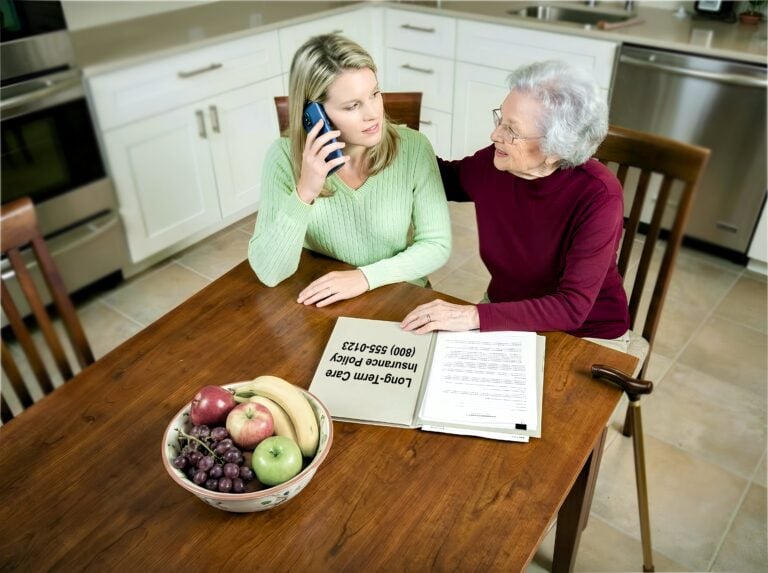

Your mom with Alzheimer’s asks for the third time today, “When is Dad coming home?”
He died five years ago.
Do you:
A) Tell her the truth — “Mom, Dad passed away. Don’t you remember?”
B) Redirect without correcting — “You must miss him. Tell me about your favorite memory together.”
For decades, dementia care professionals have debated this exact question. The answer determines whether you use Reality Orientation (option A) or Validation Therapy (option B).
Both approaches have evidence supporting them. Both can help — or harm — depending on how they’re used.
This article examines what research shows about Reality Orientation for patients with Alzheimer’s disease, when it helps, when it harms, and how modern dementia care combines the best of both approaches. Understanding how reality orientation Alzheimer’s therapy works — and when it backfires — helps families provide better care.
What Is Reality Orientation for Alzheimer’s Patients?
Reality Orientation (RO) is a cognitive therapy developed in the 1960s to help individuals with cognitive impairment stay connected to their surroundings through repeated exposure to factual information.
The core principle: Regularly reminding people with dementia of basic orienting information:
- Person — Their name, where they live, and who their family members are
- Place — Current location, what room they’re in
- Time — Date, day of week, season, year
- Situation — What’s happening, why they’re here, what comes next
How it’s implemented:
24-hour Reality Orientation — Caregivers weave orienting information into every interaction throughout the day.
Classroom Reality Orientation — Structured group sessions where participants review calendars, newspapers, clocks, and seasonal information.
Environmental cues — Signs, labels, calendars, clocks, color-coded rooms to provide constant orienting information.
Example of Reality Orientation in Practice
Patient asks: “Where am I?”
Reality Orientation response: “You’re in your home in San Diego, California. It’s Thursday, January 8th, 2026. I’m Josie, your caregiver. We’re sitting in your living room. Would you like to look at the calendar together?”
The goal: Keep the person grounded in current reality by providing clear, factual information.
The History: How Reality Orientation Became Controversial
Reality Orientation was widely used in the 1960s through the 1980s, particularly in hospitals and nursing homes.
Then, in the 1990s, it fell out of favor.
Why? Because poorly trained staff used it in ways that were cold, robotic, and emotionally harmful.
Common mistakes that gave Reality Orientation a bad reputation:
✕ Correcting patients harshly — “No, your mother is dead. She’s been dead for 20 years.”
✕ Repeated corrections without empathy — Correcting the same mistake over and over, causing distress each time
✕ Ignoring emotions — Focusing only on facts while dismissing the person’s feelings of fear, grief, or confusion
✕ Quizzing and testing — “What year is it? Where are we? What’s my name?” (This feels like a cognitive test, not supportive care.)
✕ Using it in late-stage dementia — When memory is profoundly impaired, reality orientation becomes cruel and pointless
The backlash was justified. Rigidly correcting someone’s reality without addressing their emotions is harmful.
But the problem wasn’t Reality Orientation itself — it was how it was being used.
Enter Validation Therapy: The Compassionate Alternative
In response to harsh Reality Orientation practices, Validation Therapy emerged in the 1980s, developed by social worker Naomi Feil.
The core principle: Enter the person’s reality instead of correcting it. Validate their feelings, even if their statements aren’t factually accurate.
Example of Validation Therapy in Practice
Patient says: “I need to go pick up my children from school.” (Her children are in their 60s.)
Validation Therapy response: “Tell me about your children. You must have loved taking care of them.”
The goal: Acknowledge the emotion (missing her children, wanting to care for them) without correcting the factual error.
Validation Therapy became the gold standard in dementia care because it reduces agitation and distress, preserves dignity, and avoids the emotional trauma of repeatedly confronting painful truths.
For moderate-to-severe Alzheimer’s, Validation Therapy is clearly superior to rigid Reality Orientation.
But research shows Reality Orientation still has value — when used correctly.
Related: For detailed validation techniques, do’s and don’ts, and stage-by-stage communication strategies, see our comprehensive guide: Communicating with Someone Who Has Dementia
What Does the Research Actually Show?
Multiple studies have examined the effectiveness of Reality Orientation. Here’s what the evidence tells us:
Meta-Analysis Findings (2018)
A comprehensive meta-analysis of randomized controlled trials found that Reality Orientation therapy of at least 600 minutes (10 hours) of intervention improved cognition in older people with dementia with a moderate effect size. The analysis demonstrated statistically significant effects both when Reality Orientation was used alone and when paired with other cognitive interventions. The researchers concluded that Reality Orientation therapy can be considered routine care for maintaining and improving cognitive functions in older populations with dementia.
Parkinson’s Disease Dementia Study (2019)
Research examining Reality Orientation in Parkinson’s disease dementia found significant improvements in frontostriatal functions, particularly verbal fluency and attention, when Reality Orientation was combined with medication therapy. The researchers concluded that Reality Orientation is an effective, low-cost complementary intervention that improves cognitive function.
Long-Term Care Outcomes (Italian Study)
Earlier research in Italy found that continued Reality Orientation classes during early to middle stages of dementia may delay nursing home placement and slow down the progression of cognitive decline — a significant finding for families hoping to keep loved ones at home longer.
The key takeaway: Reality Orientation improves cognition when used appropriately. Validation Therapy improves emotional well-being and cooperation. The best care uses both.
When Reality Orientation Helps (And When It Hurts)
When Reality Orientation Works Well
Early-stage Alzheimer’s:
- Memory is impaired, but the person is still primarily oriented
- They want to stay connected to the current reality
- Gentle reminders help maintain skills
- Reduces confusion and anxiety about “what’s happening”
Example situation: Your dad forgets what day it is, but wants to know, so he doesn’t miss his doctor’s appointment.
Helpful RO approach: “It’s Tuesday, Dad. Your appointment is tomorrow, Wednesday at 2 PM. I’ll remind you again tomorrow morning.”
Mild confusion that responds to factual information:
Example situation: Your mom asks, “Did I already eat lunch?”
Helpful RO approach: “Yes, we had sandwiches together about an hour ago. Are you still hungry? I can get you a snack.”
When the person asks direct questions seeking factual information:
Example situation: “What’s my address? I need to fill out this form.”
Helpful RO approach: “Your address is 123 Oak Street, San Diego, CA 92101. Would you like me to help you fill out the form?”
When Reality Orientation Causes Harm
Moderate-to-severe Alzheimer’s:
- A person cannot retain new information
- Correcting them causes repeated emotional trauma
- They’re living in a different time period mentally
Harmful situation: Your mom asks, “Where’s my mother? She’s supposed to be here.” Her mother died 30 years ago.
Harmful RO approach: “Mom, your mother is dead. She died in 1995. Don’t you remember?”
Why it’s harmful: She experiences the grief of losing her mother fresh every time, feels confused about why she can’t remember, becomes distressed and agitated, and loses trust in the person upsetting her.
Better approach (Validation): “You must miss her. Tell me about your mother. What was she like?”
When the person is living in a different time period:
Harmful situation: Your dad says, “I need to go to work. I’m going to be late.” He retired 20 years ago.
Harmful RO approach: “Dad, you’re retired. You don’t work anymore.”
Why it’s harmful: This challenges his sense of identity and purpose, may cause shame or confusion, and triggers agitation.
Better approach (Validation): “You worked so hard all those years. Tell me about your job. What did you do?”
See more examples: Our Dementia Communication Guide includes detailed do’s and don’ts for common scenarios like accusations of stealing, wanting to “go home,” and asking about deceased loved ones.
The Modern Approach: Person-Centered Care (Combining Both)
Today’s best practice doesn’t choose Reality Orientation OR Validation Therapy exclusively.
Modern dementia care uses Person-Centered Care — adapting the approach based on:
- The person’s cognitive stage
- What they’re asking for
- Their emotional state
- What causes comfort vs. distress
This approach is now supported at the federal level. In July 2024, the Centers for Medicare & Medicaid Services launched the GUIDE Model (Guiding an Improved Dementia Experience) — an 8-year nationwide initiative emphasizing comprehensive, person-centered dementia care. The model provides Medicare coverage for care coordination, care management, and caregiver support services, including up to $2,500 annually for respite care. Currently, 327 organizations are participating, representing a major shift toward recognizing the importance of individualized, flexible dementia care approaches.
The Person-Centered Decision Framework
Ask yourself:
1. Will correcting this help or harm?
- If it provides valuable information they’re seeking → gentle RO
- If it causes distress → validation
2. What is the person really asking for?
- Factual information? → Provide it (RO)
- Emotional reassurance? → Validate feelings (VT)
3. What stage of dementia are they in?
- Early stage → More RO (with empathy)
- Moderate-to-severe → More validation
4. Is this a safety issue?
- Yes → Gently orient to reality while validating emotion
- No → Validation is often enough
Applying the Person-Centered Approach
The key is combining both approaches based on the situation:
Example: Asking about a deceased spouse
Patient: “When is my husband coming home?”
Person-Centered Response: Validate emotion first, then gently orient if appropriate: “You must miss him. [pause] He passed away a few years ago. I know that’s so hard. Would you like to look at some photos together?”
If this causes distress, pivot to pure validation: “You must miss him. Tell me about him. What was he like?”
Example: Wanting to “go home” (while already home)
Patient: “I want to go home.”
Person-Centered Response: Validate the feeling (they want comfort, familiarity, safety): “Tell me about home. What did you love most about it?” Or: “This must feel confusing. You’re safe here with me. Would you like some tea, and we can sit together?”
Want more examples? Our Dementia Communication Guide covers stage-by-stage strategies, specific techniques for different dementia types, and what to do when conversations become frustrating.
How Professional Caregivers Use Reality Orientation Correctly
At All Heart Home Care, our Alzheimer’s-trained caregivers use flexible, person-centered approaches that combine Reality Orientation and Validation, tailored to the individual’s needs in each moment.
How Our Caregivers Implement Reality Orientation (The Right Way)
✓ Weaving orienting information into natural conversation — Not quizzing or testing
Example: Instead of: “Do you know what day it is?” We say: “It’s a beautiful Tuesday morning. The weather is perfect for our walk today.”
✓ Using the person’s name frequently — Reinforces identity
Example: “Good morning, Margaret! How did you sleep?”
✓ Discussing current events gently — Keeps them connected to the present
Example: “The Padres are playing today. They’re having a great season this year.”
✓ Talking about recent activities — Reinforces memory
Example: “We had a nice visit with your daughter, Sarah, yesterday. She brought you those beautiful flowers on the table.”
✓ Using environmental cues — Labels, calendars, clocks, familiar photos
Examples:
- Large digital clock showing day, date, and time
- Calendar with today’s date circled
- Labels on the bedroom, bathroom, and kitchen
- Photo boards with names under each family member
- Seasonal decorations (helps orient to the time of year)
✓ Asking gentle, open-ended questions — Not testing, but engaging
Example: Instead of: “Do you remember my name?” We say: “I’m Maria. I’ve been coming to help you for the past two years. Do you remember when we baked cookies together?”
✓ Validating emotions FIRST, then providing orienting information — Combining both approaches
Example: “I can see you’re feeling confused. That must be scary. You’re in your home in San Diego. I’m Maria, your caregiver. You’re safe here with me.”
✓ Never arguing or insisting — If correcting causes distress, we pivot to validation
Example: If saying “your mother passed away” causes agitation, we immediately shift: “Tell me about your mother. She sounds wonderful.”
✓ Adapting based on cognitive stage — More RO in early stages, more validation in later stages
When to Stop Using Reality Orientation
Reality Orientation becomes inappropriate in late-stage Alzheimer’s when:
- The person can no longer retain new information for more than a few seconds
- Correcting them causes repeated distress
- They’re consistently living in a different time period
- Their reality is more comforting than the current reality
- Quality of life improves when you enter their world instead of pulling them into ours
At this stage, validation and comfort become priorities — not orientation to a reality they can no longer process.
Other Evidence-Based Dementia Therapies
Reality Orientation is just one tool in comprehensive Alzheimer’s care. Other evidence-based approaches include:
✓ Reminiscence therapy — Discussing long-term memories from youth
✓ Music therapy — Using familiar songs to trigger memory and emotion
✓ Art therapy — Creative expression without need for words
✓ Sensory stimulation — Aromatherapy, textured materials, nature
✓ Physical exercise — Slows cognitive decline, improves mood
✓ Cognitive stimulation — Puzzles, games, conversation
✓ Social engagement — Preventing isolation
Related reading:
- 5 Types of Dementia: Key Differences Families Must Know
- What to Expect as Alzheimer’s Progresses: A Family Guide
- Communicating with Someone Who Has Dementia
The Bottom Line
Reality orientation Alzheimer’s therapy isn’t inherently good or bad — it depends entirely on how it’s used.
When used correctly:
- Gentle, empathetic, woven into conversation
- Appropriate to the cognitive stage
- Combined with emotional validation
- Flexible based on the person’s response
…it helps maintain cognitive function and reduces confusion in early-to-moderate Alzheimer’s.
When misused:
- Harsh, robotic, emotionally cold
- Applied rigidly regardless of stage
- Ignores the distress it causes
…it traumatizes, agitates, and harms.
Modern best practice: Person-centered care that flexibly uses both Reality Orientation and Validation Therapy based on what the individual needs in each moment.
Communication Decision Guide
When your loved one says something factually incorrect, ask:
☐ Will correcting help or harm?
☐ Are they asking for factual information or emotional reassurance?
☐ What stage of dementia are they in?
☐ Is this a safety issue?
☐ Can I validate their emotion while gently orienting?
☐ If correcting causes distress, can I pivot to validation?
Remember: The goal isn’t accuracy — it’s comfort, connection, and dignity.
References
- Alzheimer’s Association. (2025). 2025 Alzheimer’s Disease Facts and Figures. Alzheimer’s & Dementia. alz.org/alzheimers-dementia/facts-figures
- Huang, H.C., et al. (2018). Reality orientation therapy benefits cognition in older people with dementia: A meta-analysis. American Journal of Alzheimer’s Disease & Other Dementias. pubmed.ncbi.nlm.nih.gov/29960104
- Camargo, C.H.F., et al. (2019). The Effectiveness of Reality Orientation Therapy in the Treatment of Parkinson’s Disease Dementia. American Journal of Alzheimer’s Disease & Other Dementias, 34(3), 175-181. doi.org/10.1177/1533317518802461
- Centers for Medicare & Medicaid Services. (2024). GUIDE (Guiding an Improved Dementia Experience) Model. cms.gov/priorities/innovation/innovation-models/guide
- Validation Training Institute. The Validation Method. vfvalidation.org
We Can Help
At All Heart Home Care, our Alzheimer’s-trained caregivers understand the nuance of dementia communication. We use evidence-based approaches — Reality Orientation, Validation Therapy, and person-centered techniques — tailored to your loved one’s cognitive stage and emotional needs.
If your loved one has Alzheimer’s or dementia and you’re struggling with how to communicate effectively, call us at (619) 736-4677 for a free in-home consultation.
We’ll assess their needs and create a care plan that preserves dignity, reduces distress, and maintains connection for as long as possible.
Because how we communicate matters as much as what we say.
Disclaimer: This article is for informational purposes only and is not intended as medical advice. Communication strategies should be adapted to each individual’s specific situation, stage of dementia, and personal preferences. Consult with healthcare professionals for guidance on your loved one’s specific needs.